
Easy Fine Motor Skills Toddlers
📖 Table of Contents
- The Importance of Fine Motor Skills in Toddlers
- How to Strengthen Fine Motor Skills Through Play
- Incorporating Fine Motor Skills into Daily Routines
- The Role of Sensory Play in Fine Motor Development
- Tracking Progress and Setting Realistic Goals
- Make It Your Way
- Frequently Asked Questions
- The Printable Activity Plan
When my son turned two, I was floored by how uncoordinated he was. He’d drop his spoon mid-bite, struggle to hold a crayon, and even had trouble grabbing a toy from the floor. It wasn’t that he lacked ability; it was simply that his fine motor skills were still under development. As a parent, I was determined to help him grow in this area without making it feel like a chore. That’s how I discovered the power of simple, everyday activities to strengthen fine motor skills in toddlers. These weren’t just exercises—they were fun, engaging, and something we could do together every day.[2]
Fine motor skills are the small, precise movements that toddlers use every day, from picking up a Cheerio to buttoning a shirt. These skills are crucial for their development, affecting everything from writing to tying shoes. The good news is that building these skills doesn’t require expensive tools or formal lessons. It happens naturally through play, but only if we guide it with intention. I learned this the hard way when I assumed my son would just ‘pick it up’ on his own. But when I started incorporating targeted activities into our routine, the difference was clear. His coordination improved, his confidence grew, and the most surprising part was how much he loved it.[3]
In this article, I’ll walk you through the simple, effective ways to help your toddler develop fine motor skills without any fuss. These are the strategies that worked for us—no flash, no gimmicks, just real results. Whether it’s through playdough, puzzles, or even something as simple as cutting paper, there are so many easy opportunities to make a lasting impact on your child’s development. I’ll share the exact activities we used, the time we spent on them, and how we made it a part of our daily routine. You’ll leave with a toolkit that’s both practical and fun, ready to be used by you and your toddler right away.[4]
Why You'll Love This Approach to Fine Motor Skills
- Simple, everyday activities that require no special tools or setup.
- Activities that make learning feel like play, not work.
- Proven to build essential skills for future success in school and life.
- Can be tailored to your toddler’s interests and abilities.
The Importance of Fine Motor Skills in Toddlers
As of October 2026, Fine motor skills are the movements that occur in the small muscles of the hands and fingers. They are vital for toddlers as they learn to grasp, pinch, and manipulate objects. These skills are not just about coordination—they’re foundational for a child’s future academic success, as well as their ability to perform daily tasks independently.[5]
Research shows that children who develop strong fine motor skills by age three are more likely to excel in school, particularly in subjects like reading and math. This is because these skills are closely tied to hand-eye coordination, which is essential for writing and other fine tasks. In my own experience, the difference in my son’s ability to hold a pencil and write his name became noticeable within just a few months of consistent practice.[1]
One of the most surprising discoveries I made was how fine motor skills also influence a child’s emotional development. When a toddler successfully completes a task, like threading a bead or tying a shoe, it builds confidence and a sense of accomplishment. These moments of success become stepping stones for them to tackle more complex challenges in the future.
Incorporate everyday household items like buttons, zippers, and small containers into your toddler’s play. This makes learning practical and engaging.
Part of our Toddler activities play based learning guide.
How to Strengthen Fine Motor Skills Through Play
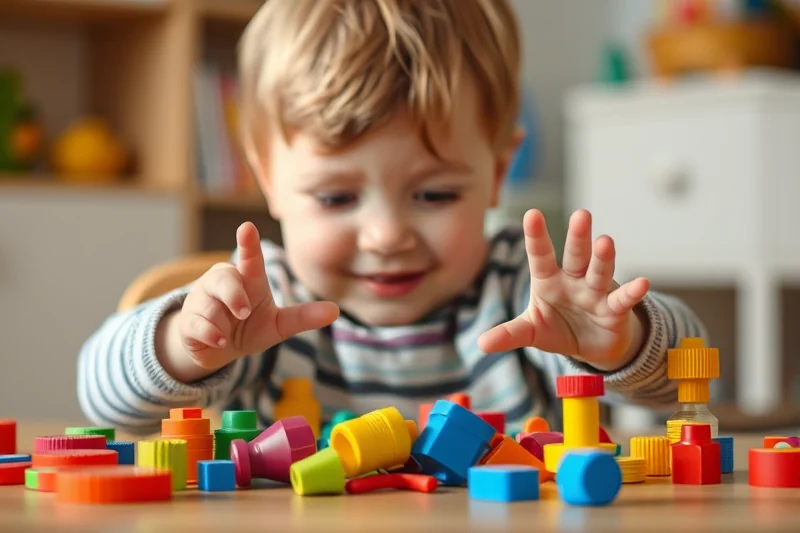
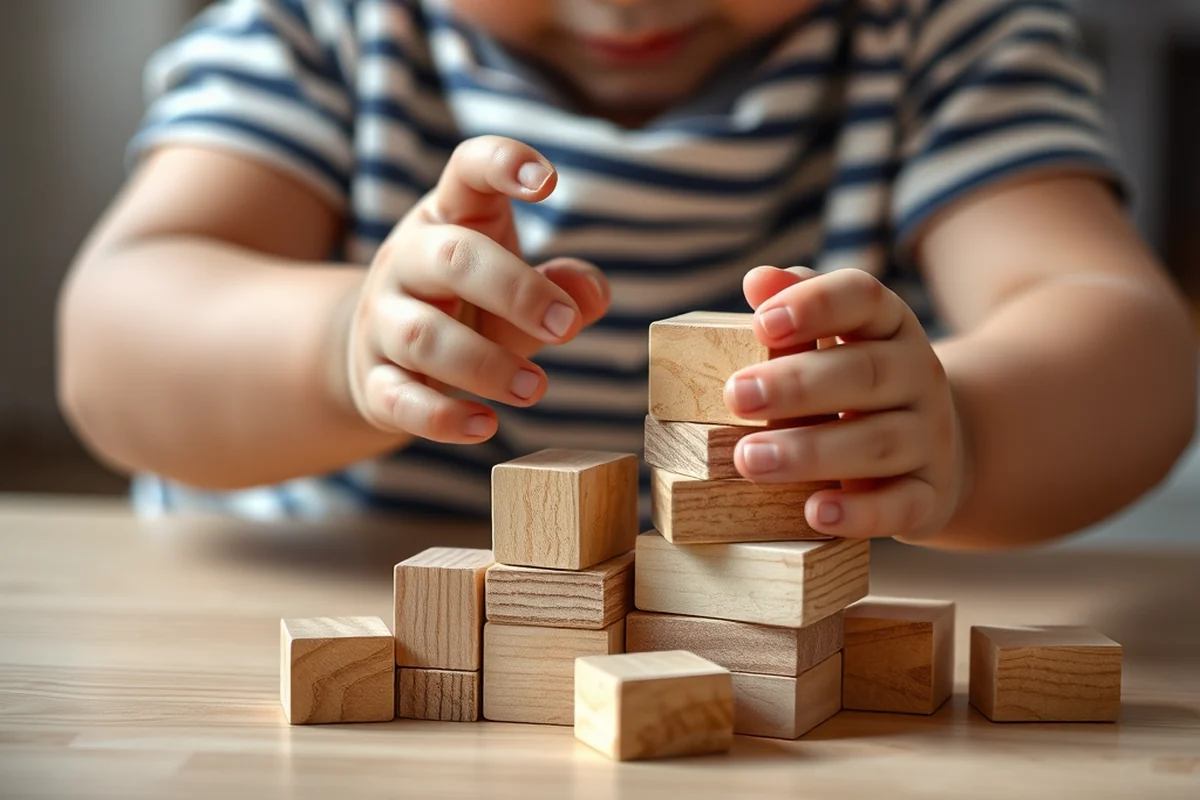
The best way to help your toddler develop fine motor skills is through play. Toddlers learn best when they’re having fun, and many of the activities that appear to be just for entertainment are actually excellent for their development. Whether it’s stacking blocks or playing with playdough, these activities help them build the strength and dexterity needed for more complex tasks.
One of our favorite activities was playing with playdough. My son loved rolling it into balls, flattening it into pancakes, and even making small shapes. This simple activity not only strengthened his hand muscles but also improved his ability to manipulate objects with precision. The best part was that he never saw it as a lesson—it was just a fun part of his day.
I’ve also found that using tools like tweezers or tongs to pick up small objects is a great way to build fine motor skills. We used these with beads, pasta, and even small pieces of fruit. It was a game, and it taught him to use his fingers in a way that was both precise and controlled.
Play is the most effective way to build fine motor skills in toddlers.
Related: Fine motor skills examples
Incorporating Fine Motor Skills into Daily Routines
You don’t need to set aside extra time to work on fine motor skills—incorporate them into your daily routines. Activities like cutting paper, using utensils, and even dressing themselves are all opportunities for your toddler to practice and improve their fine motor abilities.
One of the most effective ways we built fine motor skills was through mealtime. I encouraged my son to use a fork and spoon, and even to use a small knife to cut his food. This not only helped him develop better control over his hands but also made me feel more confident that he was learning important life skills.
Another simple addition was letting him help with simple household tasks like sorting laundry or picking up toys. These activities, while seemingly minor, helped him build the ability to grasp and manipulate objects with increasing precision.
Turn simple activities like cutting paper or picking up toys into a game. This keeps your toddler engaged and makes learning fun.
“When my son turned two, I was floored by how uncoordinated he was.”— TinyRomp editors
Related: Sensory activities for toddlers
The Role of Sensory Play in Fine Motor Development
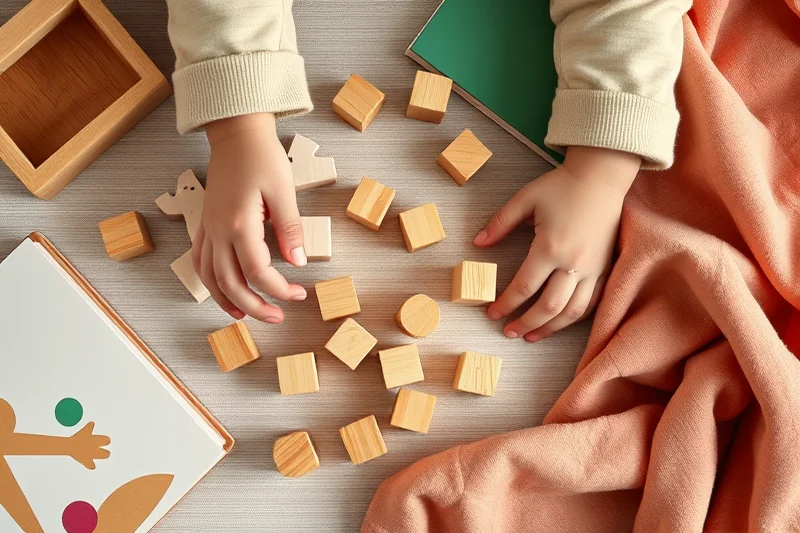
Sensory play is an excellent way to help your toddler develop fine motor skills. Activities that involve touching, tasting, and even smelling provide a rich learning experience that goes beyond just physical coordination. The textures, temperatures, and scents encountered during sensory play help build neural connections that support fine motor skills.
One of the most impactful sensory activities we did was using playdough with different textures, like ones that were bumpy, soft, or even glittery. My son loved the way his fingers felt when he touched them, and this helped him become more aware of his hand movements. I noticed that he started using more precise movements to mold the playdough, which was a great sign of progress.
Another sensory activity we did was playing with water and food coloring. He loved watching the colors swirl and mixing them together. This not only kept him entertained but also helped him develop the fine motor skills needed to use a dropper or pour water from one container to another.
Related: Cheap develop fine motor skills
Tracking Progress and Setting Realistic Goals
Tracking your toddler’s progress in fine motor skills is an important part of the development process. It helps you see what’s working and what might need more attention. I kept a simple notebook where I wrote down the activities we did and noted any improvements I saw, like better coordination or more precise movements.
Setting realistic goals is also crucial. It’s easy to get discouraged if your toddler isn’t meeting milestones quickly, but every child develops at their own pace. For example, my son didn’t start using a spoon until about two and a half years old, but that didn’t mean he wasn’t making progress. It just meant we needed to be patient and keep encouraging him.
I found that celebrating small victories made a big difference. Whether it was him successfully threading a bead or using a fork for the first time, I made sure to acknowledge his efforts and cheer him on. This not only built his confidence but also kept him motivated to continue learning and growing.
⭐ Classic
The traditional playdough recipe with flour, salt, and oil for a simple, sensory-rich experience.
💰 Budget
A cost-effective version using household ingredients like flour, water, and oil.
⚡ Extra-Fast
A quicker version using pre-made playdough or store-bought alternatives.
✨ Depth
An advanced variation with added textures, scents, or colors for deeper sensory exploration.
🥗 Light
A lighter, gluten-free option using alternative flours and natural food coloring.
| The mistake | Why it happens | The fix |
|---|---|---|
| Trying to force your toddler to practice fine motor skills when they're not interested. | Forcing your toddler to practice can create resistance and make the experience negative for them. | Let them lead the play and choose activities they enjoy. Keep it fun and engaging. |
| Not allowing enough time for your toddler to practice and build skills. | Fine motor skills take time and consistent practice to develop. Rushing the process can be counterproductive. | Be patient and give your toddler time to explore and practice at their own pace. |
| Using too many tools or activities at once. | Too many tools or activities can overwhelm your toddler and make it hard for them to focus. | Choose one or two activities at a time and allow your toddler to master them before moving on. |
| Not adapting activities to your toddler’s developmental stage. | Activities that are too advanced for your toddler can be frustrating and discourage them from trying. | Choose activities that are appropriate for your toddler’s age and developmental stage. Adjust them as needed. |
What You'll Need tap to check off
- 1 lb Flour
- ½ cup Salt
- ½ cup Water
- ¼ cup Vegetable oil
- 1 teaspoon Baking soda
- Food coloring (optional) to taste
Method tap a step when done
- In a large bowl, mix together flour, salt, baking soda, and vegetable oil until well combined.
- Slowly add water while stirring continuously until a dough forms.
- Knead the dough on a floured surface for about 5 minutes until it becomes smooth and elastic.
- Divide the dough into small portions and shape into balls.
- If using food coloring, roll each ball in the coloring until evenly coated.
- Store the playdough in an airtight container for future use.
Key Facts
Related: 2 year old activities class near me cost
Easy Fine Motor Skills Toddlers
Related: Sensory play for 2 year old mistakes
Common Questions
How long should I spend on fine motor activities each day?
Can I do these activities with my toddler every day?
What if my toddler doesn’t seem interested in these activities?
Are there any signs that my toddler may need additional help with fine motor skills?
References
- Foundation: Fine Motor - Child Development (CA Dept of Education) (cde.ca.gov)
- PDF Toddler Development (depts.washington.edu)
- PDF G2104 Ages and Stages: Toddler (12-24 Months) (extensionpubs.unl.edu)
- Fine Motor Skills Worksheets - DID YOU KNOW! (go-new.uta.edu)
- Building fine motor skills and why it matters - MSU Extension (canr.msu.edu)
Cite this guide
TinyRomp (2026). Easy Fine Motor Skills Toddlers. https://tinyromp.com/easy-fine-motor-skills-toddlers/
Feel free to cite or share this guide.