
Cheap Sensory Play For Beginners
📖 Table of Contents
As a first-time parent, I remember the first time my daughter touched a handful of kinetic sand in a toy store. She stared, then giggled, then pressed it against her face, and I knew I had found something special. It was messy, yes, but it was also magical. Sensory play isn’t just about fun—it’s about learning, developing, and connecting. And the best part? It doesn’t need to be expensive. That’s where I found my way, and I want to share it with you.[3]
When I first started looking into sensory play for my baby, I was overwhelmed by the cost of store-bought kits. They were cute, but the prices were intimidating. Then I realized I could make most of it at home with things I already had. I filled a bowl with rice and food coloring, and suddenly, I had a sensory bin that cost less than $5. It was simple, but it sparked curiosity in my daughter, and that made all the difference.[4]
Cheap sensory play for beginners is about creativity, accessibility, and simplicity. It's about making the most of what you have and finding joy in the little things. I’ve tried so many different methods over the years—some worked, some didn’t, but I learned a lot. And now, I want to pass that knowledge on to you. Let’s explore how you can create meaningful, affordable sensory play experiences for your little one.[5]
Why You'll Love This Affordable Sensory Play
- It’s budget-friendly and uses everyday items from your home.
- It encourages exploration and development without the need for expensive toys.
- It’s versatile and can be adapted for different stages of your child’s growth.
- It’s a safe, mess-friendly way for kids to learn through play.
Why Sensory Play Matters for Toddlers
As of August 2026, Sensory play is one of the most important ways young children learn. It helps them explore their environment and understand cause and effect. For example, when a child squishes playdough, they learn about texture and pressure. When they pour water from one container to another, they begin to understand volume and gravity. These are all valuable skills that form the foundation for future learning.
I noticed a huge difference in my daughter’s development after we started incorporating sensory play into our routine. She was more curious, more engaged, and more willing to try new things. Her fine motor skills improved significantly, and she even started talking more as she described what she was doing. It was like watching a puzzle piece fall into place.
But the best part about sensory play is that it’s not just educational—it’s also fun. Kids love the mess, the exploration, and the freedom to just be. It’s a way to connect with your child and watch them grow in real time.
Set aside 10–15 minutes each day for sensory play. Even small, consistent sessions can have a big impact on your child’s development.[1]
Part of our Play based guide.
How to Start With Cheap, No-Frills Sensory Bins

Creating a sensory bin doesn’t require a lot of money or special materials. I’ve used rice, dried beans, pasta, and even crumpled paper to make bins that my daughter loved. All it takes is a large container, a few fillers, and some imagination.
One of my favorite sensory bins was made with rice and food coloring. I mixed a few drops of food coloring into a bag of rice, sealed it, and let it sit. The result was a soft, colorful bin that my daughter loved to dig through. It was easy to make, and I only spent about $2.40 on the rice and food coloring.[2]
You can also use household items like sponges, pebbles, or even dried pasta to create different textures and experiences. The key is to let your child explore and interact with the materials in their own way.
A little rice and food coloring can go a long way in a child’s development.
Related: Sensory play recipes for beginners
Related: Sensory play for beginners 2026
Related: Play based learning for beginners printable
Related: Play based learning for beginners tips
Related: Sensory play for beginners list
What to Do When You Run Out of Ideas
It’s easy to get stuck in a rut with sensory play, especially if you’re working with limited materials. One of the best ways to keep things fresh is to mix different textures, colors, and objects together. For example, I’ve made bins with a combination of rice, dried beans, and small plastic animals. It adds variety and keeps my daughter engaged for longer.
I also love adding small items like spoons, measuring cups, and even toys to the bins. This not only adds another layer of fun, but it also helps with motor skills. My daughter learned to scoop and pour, and she loved watching the items float or sink in water.
The key to keeping sensory play interesting is to mix and match different materials and objects. It’s an easy way to keep your child engaged and excited about learning.
Change the contents of your sensory bins every week to keep your child interested and excited. This also helps reinforce new skills and concepts.
“As a first-time parent, I remember the first time my daughter touched a handful of kinetic sand in a toy store.”— TinyRomp editors
How to Clean Up After Messy Play
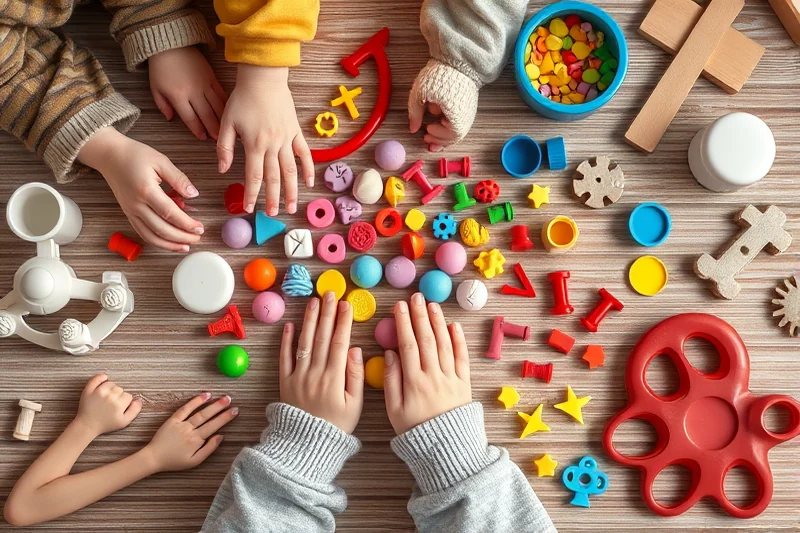
Messy play is inevitable, and that’s okay. The key is to have a plan for cleaning up afterward. I always keep a few plastic bags on hand for collecting the materials after playtime. It’s quick and easy, and it helps avoid making a mess in the house.
Another tip I learned the hard way is to avoid using paper towels. They just make a bigger mess. Instead, I use a small dish rack and let the water drip off the items before cleaning them. It’s a simple step, but it makes a huge difference in the long run.
I also like to set up a small station near the play area with a few buckets, sponges, and a cloth. This helps keep everything organized and makes cleanup faster. It’s a small investment, but it pays off in the long run.
What to Avoid When Setting Up Sensory Play
Safety is always the top priority with sensory play. One of the first things I learned was to avoid using small objects that could be a choking hazard. I made a mistake once by using tiny plastic pieces, and I was horrified when my daughter tried to put one in her mouth. It was a wake-up call.
Another thing to avoid is using any materials that could be toxic or harmful. I learned this the hard way when I used a food dye that wasn’t safe for babies. It was a costly mistake, both in terms of money and my child’s health.
Lastly, never leave your child unattended during sensory play. Even the most harmless items can become a hazard if your child isn’t supervised. It’s important to stay close and ensure your child is safe at all times.
⭐ Classic
The original recipe with white rice and basic food coloring for a simple, colorful sensory bin.
💰 Budget
Use leftover rice and free food coloring from your pantry to keep the cost low and the fun high.
⚡ Extra-Fast
Skip the 24-hour soak and use pre-colored rice to make the bin ready in minutes.
✨ Depth
Add layers of different colored rice to create a multi-level sensory experience for your child.
🥗 Light
Use uncooked pasta or dried beans for a lighter, less messy sensory play option that’s easier to clean up.
| The mistake | Why it happens | The fix |
|---|---|---|
| Using the wrong type of food coloring | Some food coloring can be toxic or cause skin irritation if not used properly. | Always use food coloring that is labeled as safe for children and avoid any that contain harsh chemicals. |
| Not cleaning the rice properly | If the rice isn’t cleaned, it can become a breeding ground for bacteria and mold. | After each use, make sure to clean the rice thoroughly and dry it completely before storing it again. |
| Leaving the sensory bin unattended | Unsupervised sensory play can be a safety hazard, especially with small objects or messy materials. | Always supervise your child during sensory play and ensure the environment is safe and secure. |
| Using the same sensory bin for multiple children without cleaning | Sharing a sensory bin without cleaning can spread germs and cause illness. | Always clean and sanitize the bin between uses, especially if it’s being used by multiple children. |
What You'll Need tap to check off
- 1 lb uncooked white rice
- ½ cup food coloring (any color of choice)
- plastic containers or bins for storage
Method tap a step when done
- In a large mixing bowl, add the rice.
- Add 2–3 drops of food coloring to the rice and mix thoroughly.
- Place the rice in a sealed plastic bag and let it sit for 24 hours to allow the color to fully absorb into the rice.
- Once the rice is fully colored, transfer it to a sensory bin or container.
- Add any additional items like small plastic animals, spoons, or measuring cups to enhance the play experience.
- Store the sensory bin in a cool, dry place until ready to use.
Key Facts
Cheap Sensory Play For Beginners
Common Questions
What if my child is allergic to rice?
Can I reuse the rice in the sensory bin?
How long does the color last in the rice?
What if my child doesn’t like the texture of the rice?
References
- Supporting Children's Learning Through Play - Childcare.gov (childcare.gov)
- PDF Sensory Play (dese.ade.arkansas.gov)
- The Impact of Sensory Materials on the Behavior of Children in Early ... (digitalcommons.cortland.edu)
- Clemyjontri Park | Park Authority - Fairfax County (fairfaxcounty.gov)
- Splish, Splash, Splat - Hooray for Messy Play! | HeadStart.gov (headstart.gov)
Cite this guide
TinyRomp (2026). Cheap Sensory Play For Beginners. https://tinyromp.com/cheap-sensory-play-for-beginners/
Feel free to cite or share this guide.