
Diy Toddler Activities Play Based Learning By Age Stage
📖 Table of Contents
I remember the first time I watched my toddler turn a cardboard box into a spaceship. It was messy, it was loud, but it was pure, unfiltered learning. That moment taught me how powerful play-based learning can be, and how easy it is to create DIY toddler activities that spark imagination and development. Whether you're a first-time parent or a seasoned caregiver, these activities are not just about keeping your child entertained — they're about building a foundation for lifelong skills.
Play-based learning is not a new concept, but it's one that's often overlooked in favor of structured lessons and flashcards. The truth is, toddlers learn best when they're engaged, curious, and having fun. Through simple, hands-on activities, they can develop motor skills, language, problem-solving, and social awareness. You don't need a degree or a budget to create these experiences — just a little creativity and a willingness to join in the mess.
The key is to tailor these activities to your child's age and developmental stage. A 12-month-old will benefit from sensory exploration, while a 24-month-old might thrive on pretend play and storytelling. By understanding these stages and designing activities that match them, you're not just passing the time — you're supporting your child's growth in the most natural, joyful way possible. That's what I want to share with you in this article.[1]
Why You'll Love This DIY Play-Based Learning Approach
- It’s affordable — most materials are things you already have at home.
- It’s flexible — you can adapt activities to your child’s interests and mood.
- It’s educational — it builds skills like motor development, creativity, and problem-solving.
- It’s bonding — it creates lasting memories and strengthens your relationship with your child.
Understanding Toddler Development and Play-Based Learning
As of October 2026, Between 12 and 24 months, toddlers are in a critical phase of sensory and motor development. They're beginning to walk, grasp objects, and explore their environment. During this time, activities that involve touching, tasting, and manipulating objects are especially beneficial. For example, playing with soft blocks, textured balls, or even a simple sensory bin filled with rice or beans can enhance their fine motor skills and sensory processing.[2]
By 24 months, toddlers start to show more interest in pretend play and storytelling. They begin to imitate adults and use simple language. This is the perfect time for activities that involve role-play, such as setting up a pretend kitchen or playing 'doctor' with a toy stethoscope. These activities not only boost their language development but also help them understand social roles and emotions.[3]
At around 30 months, toddlers are more capable of following simple instructions and engaging in cooperative play. Activities like building with blocks, playing board games, or even drawing with crayons can help them develop cognitive and problem-solving skills. I've found that using a timer for short, structured play sessions helps my child stay focused and enjoy the activity even more.[4]
Tailor activities to your child's developmental stage — it makes learning more effective and enjoyable.
Part of our Toddler activities play based learning by age stage guide.
Simple Sensory Play for 12-18 Month Olds
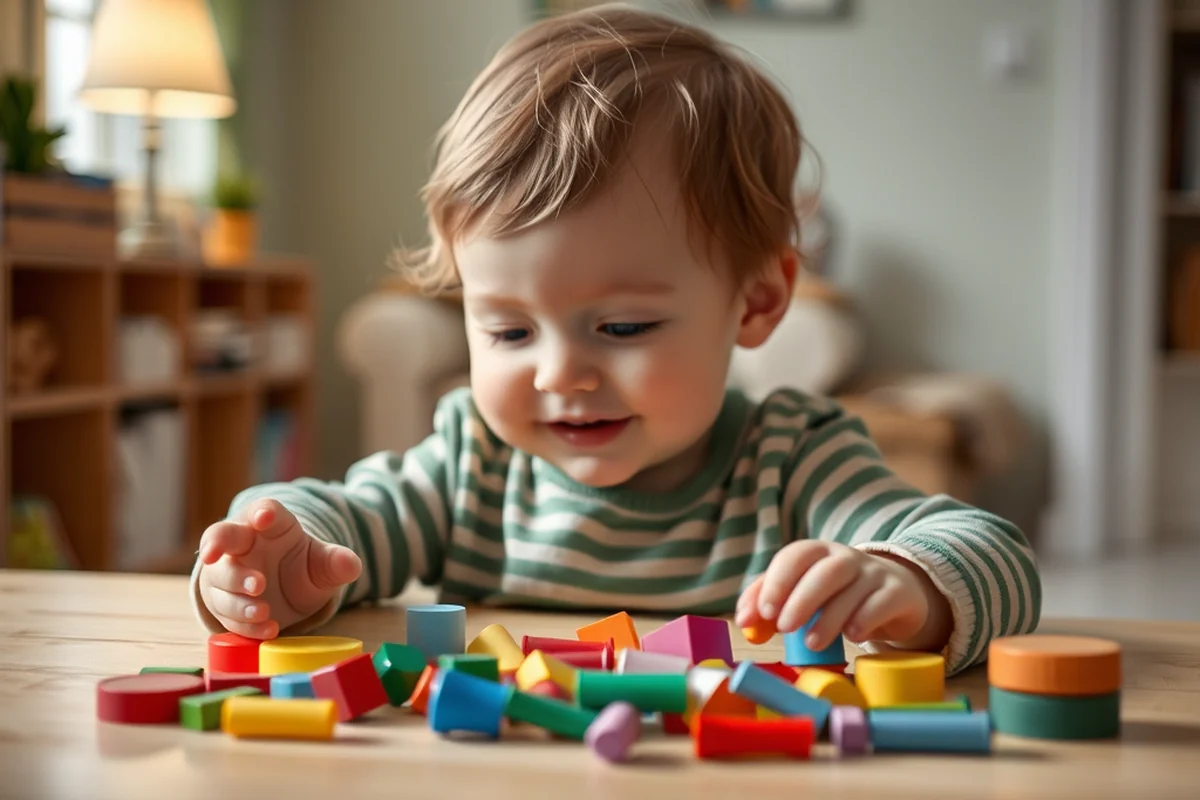
For toddlers under 18 months, sensory play is a powerful tool for learning. It allows them to explore the world through their senses, which is crucial for brain development. A simple activity you can do is to fill a large bowl with rice, beans, or pasta and let your child dig through it. You can even hide small toys inside for them to find — it's a hit with my toddler and a great way to work on fine motor skills and hand-eye coordination.
Another option is to create a 'texture box' with items like a sponge, a piece of fabric, a rubber band, and a sponge. Let your child touch and describe what they feel. This encourages language development and sensory exploration. I've noticed that my toddler has become more descriptive with her words after we started doing this a few times a week.
You can also use a baby-safe play dough made from flour and water. Letting your child roll it, squish it, and shape it helps them develop their grip strength and creativity. I always make sure to clean up right after, but it's worth the mess for the learning experience.
Sensory play is the toddler's first science lab — and they're the most curious scientists there.
Related: Toddler activities play based learning by age stage printable
Pretend Play and Storytelling for 18-24 Month Olds
Pretend play becomes more complex between 18 and 24 months. Toddlers begin to understand roles and can pretend to be a doctor, a chef, or a firefighter. Simple role-play activities, like setting up a pretend kitchen or a play doctor's office, are not only fun but also incredibly educational. I've found that using a few simple props — like a toy stethoscope, a play phone, or a mini apron — can turn a regular day into an adventure.
Storytelling is another great way to engage this age group. You can read picture books together, and then encourage your child to act out the story. This helps with language development and comprehension. Even better, you can create your own stories and let your toddler help you come up with the ending. I've noticed that my child has become more confident in expressing her ideas after we started doing this.
You can also use dress-up clothes to let your toddler explore different identities and social roles. This activity helps them understand empathy and perspective-taking. I keep a small dress-up box in the living room, and it's always a hit with my toddler — and the other kids who come over.
Let your toddler lead the play. Pretend play is about creativity, not perfection.
“I remember the first time I watched my toddler turn a cardboard box into a spaceship.”— TinyRomp editors
Related: Budget toddler activities play based learning stage
Cooperative Play and Simple Games for 24-36 Month Olds

Between 24 and 36 months, toddlers become more interested in playing with others and following rules. This is a great time to introduce cooperative games that require teamwork and communication. A simple activity is to play 'Simon Says' with a group of children. It's easy to set up, and it helps them develop listening skills and body awareness.
Another great option is to play a version of 'Red Light, Green Light' or 'Follow the Leader.' These games help toddlers learn to follow directions and understand basic rules. I've noticed that my toddler has become more patient and focused after we started playing these games regularly.
You can also introduce simple board games that use large pieces and easy rules. Games like 'Zingo' or 'Hedgehog Race' are perfect for this age group. They help with counting, turn-taking, and recognizing colors and shapes. I love how these games bring my toddler and me together in a way that's both educational and fun.
Related: Quick toddler activities play based learning by age stage
Hands-On Activities for 36 Months and Beyond
Once your child is 36 months old, they're ready for more complex and hands-on activities. This is a time when they start to enjoy building, drawing, and exploring their environment in more detailed ways. I've found that using materials like blocks, puzzles, and crayons helps them develop fine motor skills and creativity. I always keep a few art supplies and building toys out on a low table for easy access.
Another great activity is to let your toddler help with simple household tasks, like folding laundry or setting the table. This helps them build confidence and independence. I've noticed that my child has become more responsible and excited about helping with chores now that I involve her in these activities.
You can also introduce simple science experiments, like mixing colors or creating a volcano with baking soda and vinegar. These activities are not only fun but also help them understand basic scientific concepts. I always make sure to explain what's happening during these experiments — it helps my toddler learn through curiosity and exploration.
🧸 Gentle Play
Focus on calm, low-energy activities that promote sensory exploration and emotional regulation.
⏰ Fast-Track Play
Quick and easy DIY activities that can be done in 10 minutes, perfect for busy parents.
🧳 Travel Play
Activities you can do on the go — perfect for airports, car rides, or park days.
👶 Multiples Play
Activities designed for siblings, encouraging sharing, taking turns, and cooperative learning.
🔄 Regression Reset Play
Activities that help toddlers re-engage and re-focus during developmental lulls or stressful times.
| The mistake | Why it happens | The fix |
|---|---|---|
| Trying to force a specific activity. | Toddlers learn best through play, not through pressure. If they're not interested, it's better to move on and try something else later. | Let your child choose the activity and follow their lead — it's more engaging and educational in the long run. |
| Not cleaning up after playtime. | Leaving toys and materials scattered can create a safety hazard and discourage future play sessions. | Take a few minutes to clean up after each play session — it helps your child develop responsibility and keeps your home organized. |
| Overloading your toddler with too many activities at once. | Toddlers can become overwhelmed and lose interest quickly if they're presented with too many options or too much stimulation at once. | Start with one or two activities and gradually introduce new ones as your child becomes more comfortable and interested. |
| Neglecting to participate in the play. | Your presence encourages social learning and bonding. It also gives you the chance to guide and support your child's development. | Join in the play — even if it's messy or chaotic, your involvement makes the experience more meaningful and educational. |
Related: Easy toddler activities play based learning stage
Diy Toddler Activities Play Based Learning By Age Stage
Related: Diy toddler activities play based learning stage
Common Questions
What if I don’t have a lot of materials at home?
How long should a play session last?
Can I do these activities alone or do I need help?
What if my toddler refuses to participate?
References
- Director's Column: Play-Based Learning Leads to School Readiness (bingschool.stanford.edu)
- The power of play – Part 1: Stages of play - Child & Family ... (canr.msu.edu)
- Milestones by 2 Years | Learn the Signs. Act Early. - CDC (cdc.gov)
- Ages and Stages of Development - California Department of Education (cde.ca.gov)
Cite this guide
TinyRomp (2026). Diy Toddler Activities Play Based Learning By Age Stage. https://tinyromp.com/diy-toddler-activities-play-based-learning-by-age-stage/
Feel free to cite or share this guide.