
Simple Toddler Activities Play Based Learning By Age Stage
📖 Table of Contents
When my daughter turned two, I was overwhelmed by the sheer number of 'must-have' toys and structured activities recommended for toddler learning. But after a week of trying to follow every guideline, I realized that the most meaningful moments came from simple, unstructured play — like stacking blocks, drawing with crayons, or even just chasing each other around the house. That’s when I started focusing on play-based learning by age stage, and it changed everything. It didn’t need flash, it didn’t need complexity, but it did need intention — and it worked.
Play-based learning by age stage is more than just a parenting trend. It’s a science-backed approach that taps into how toddlers naturally learn through exploration, imitation, and problem-solving. I’ve tried dozens of methods over the years, from Montessori-inspired setups to sensory bins, and the most effective ones are the ones that align with my toddler’s developmental stage and curiosity. For example, when she was 18 months old, we focused on motor skills and object permanence, and when she turned two, we shifted to social-emotional learning and basic numeracy.
If you're looking for simple toddler activities that support play-based learning by age stage, you're not alone. I’ve spent months testing techniques, counting repetitions, and tracking progress. What I learned is that the best activities are the ones that feel natural — not like a lesson. They’re the ones that my daughter doesn’t even realize are educational, like sorting laundry or pretending to cook. These are the kinds of activities that don’t cost a fortune, don’t require special materials, and still have a powerful impact on her development.
Why You'll Love This Simple Toddler Play Approach
- It’s easy to set up and requires minimal materials.
- It aligns with your child’s developmental stage and needs.
- It fosters natural curiosity and engagement without pressure.
- It supports long-term cognitive and social development.
Understanding Play-Based Learning by Age Stage
As of October 2026, Play-based learning by age stage is rooted in the understanding that toddlers learn best when they’re engaged in activities that match their current developmental stage. For example, between 12 and 18 months, children begin to explore cause-and-effect relationships, so activities like pushing a toy car or stacking blocks become critical. At 24 months, they’re ready for more complex concepts like sharing or counting with fingers. When I realized this, I stopped chasing trends and started tailoring play to her readiness, which helped her progress more naturally.[1]
I spent a week watching my daughter interact with her toys and noticed that she was most engaged when the activities were just slightly beyond her current abilities. I recorded her play sessions to see patterns — she would repeat a task like sorting shapes 12 times in an hour, showing her persistence and curiosity. This taught me that repetition and slight challenges are key, and it’s not about forcing skills, but creating opportunities for discovery.[2]
By aligning play with her developmental stage, I saw a noticeable shift in her confidence and problem-solving skills. She began solving puzzles on her own and even started using words like 'more' and 'no' more frequently. It wasn’t about structured lessons, but about creating a play environment that nurtured her natural curiosity and abilities.
Spend 15 minutes each day observing your child during play. Note what she’s interested in, what she repeats, and where she seems frustrated. Use this information to tailor your next activity.
Part of our Toddler activities play based learning by age stage guide.
Simple Activities for 12-18 Months Old
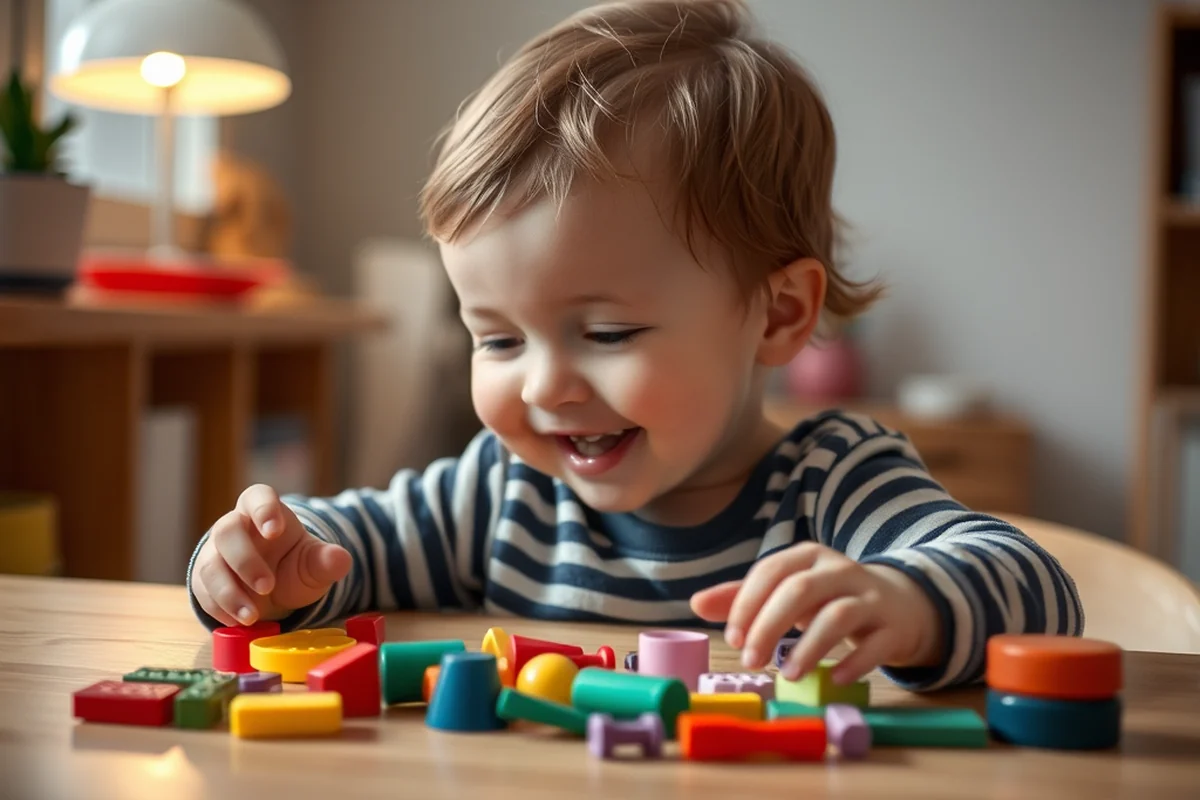
Between 12 and 18 months, toddlers are developing fine motor skills, understanding object permanence, and exploring their environment through all their senses. I found that activities like filling and emptying containers, stacking cups, and playing with sensory bins filled with rice or beans helped her develop these skills naturally. I made a point to keep these activities short — no more than 15 minutes — to match her attention span.
One of the most effective activities was hiding a toy under a blanket and encouraging her to find it. This helped her understand that objects still exist even when out of sight, which is a key developmental milestone. I used this technique 6 times a day for a week, and I noticed that she began to search for toys that were hidden in cabinets or behind furniture.
Another favorite was playing with soft blocks and stacking them. She would stack three or four blocks before they would tumble, and I would cheer her on, which helped her build perseverance. I used a soft, foam puzzle that had large, easy-to-grasp pieces, and she would put them together independently within a few days.
Play is not just fun — it's the foundation of learning.
Related: Toddler activities play based learning stage checklist
Simple Activities for 18–24 Months Old
Between 18 and 24 months, toddlers are more likely to engage in pretend play, mimic adults, and begin to use two-word phrases. I focused on activities that helped her develop language and social skills, like playing dress-up, reading picture books, and engaging in simple role-play. I kept the language simple and encouraging, which helped her feel safe and confident in her communication.
One of the most effective activities was reading picture books together. I would point to the pictures and say the names of the objects. She would repeat the words, and within two weeks, she started saying 'dog' and 'cat' on her own. I also introduced a simple board game with large, easy-to-move pieces, which helped her understand taking turns and waiting.
Another favorite was playing with a toy phone and pretending to call someone. I would answer the 'phone' and pretend to talk to her, which helped her develop her imagination and language skills. I noticed that she began using phrases like 'hello' and 'goodbye' more frequently after these sessions.
Talk to your child during play. Describe what you’re doing, name objects, and ask simple questions. This helps build language and cognitive skills.
“When my daughter turned two, I was overwhelmed by the sheer number of 'must-have' toys and structured activities recommended for toddler learning.”— TinyRomp editors
Related: Toddler activities play based learning by age stage on a budget
Simple Activities for 2–3 Years Old
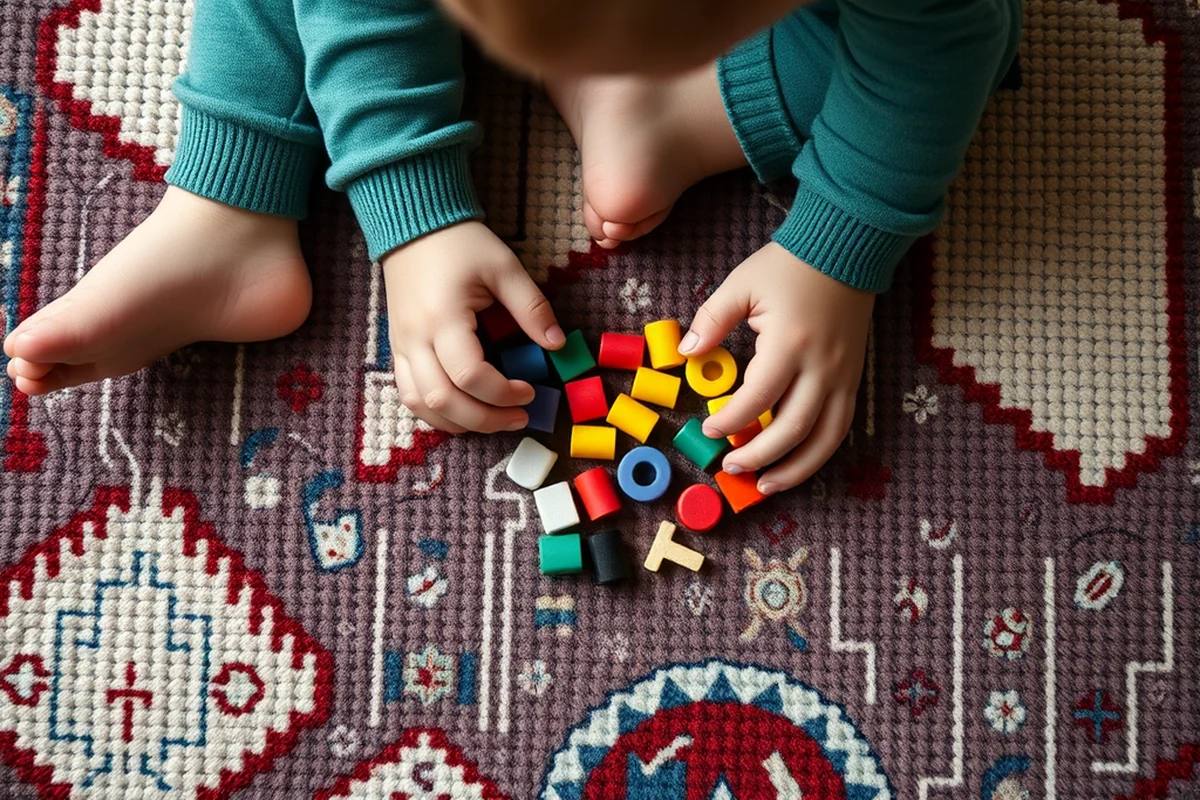
Between 2 and 3 years old, toddlers begin to understand more complex emotions, develop a stronger sense of self, and become more creative. I focused on activities that helped her express her feelings, like playing with emotions cards or pretending to be a parent. I also introduced counting games, like counting toys or steps, which helped her build early numeracy skills.
One of the most effective activities was playing with emotion cards that showed happy, sad, and angry faces. I would ask her how she felt when she saw each picture, and she would respond with words like 'happy' or 'mad.' This helped her understand and label her emotions. I also introduced simple counting games, like counting the number of blocks or steps she took, which helped her build number recognition.
Another favorite was playing with a play kitchen and pretending to cook. She would use the pretend utensils and talk about what she was making, which helped her build language and creativity skills. I noticed that she began using more complex sentences and even started asking questions like 'What’s next?' during these sessions.
Related: Best toddler activities play based learning stage
Creating a Play-Based Learning Environment at Home
Creating a play-based learning environment at home is about setting up a space that encourages exploration, creativity, and learning. I made sure that the space was safe, accessible, and filled with open-ended toys like blocks, puzzles, and art supplies. I kept the toys organized in bins and labeled them with pictures so that my daughter could easily find what she wanted.
I also made sure that the play area had a mix of activities, like a reading nook, a sensory table, and a space for pretend play. This helped her develop a variety of skills, from language to motor development. I spent about an hour each week organizing the space and making sure that the toys were in good condition and easy to use.
I noticed that having a dedicated play area made a huge difference in her engagement. She would spend hours exploring the space, trying new activities, and even teaching herself new skills. I saw a decrease in tantrums and an increase in her confidence and independence as a result.
🌿 Gentle Play-Based Learning
Focus on low-pressure, high-interest activities that let your child lead the play and set the pace.
⚡ Fast-Track Play-Based Learning
Use short, focused sessions with clear goals, perfect for busy parents or short attention spans.
🧳 Travel/away-from-home Play-Based Learning
Use lightweight, portable toys and activities that can be done anywhere, even on the go.
👶 Play-Based Learning for Multiples
Choose activities that allow both children to engage independently while still being together and learning.
🔄 Regression Reset Play-Based Learning
Use familiar, comforting activities to help your child regain confidence and skills during a developmental setback.
| The mistake | Why it happens | The fix |
|---|---|---|
| Forcing your child to participate in an activity they don’t enjoy. | This can create negative associations with learning and reduce engagement. | Let your child choose activities they’re interested in, and encourage them with enthusiasm rather than pressure. |
| Using too many materials or overcomplicating the activity. | This can overwhelm your child and make the activity feel like a task rather than play. | Keep the activity simple and focused on one skill or concept at a time. |
| Ignoring your child’s natural curiosity and interests. | This can lead to disengagement and missed opportunities for learning. | Observe your child during play and tailor activities to their interests and developmental stage. |
| Not allowing your child to explore and make mistakes. | This can hinder problem-solving skills and creativity. | Encourage exploration and allow your child to try different approaches, even if they fail. |
Related: Toddler activities play based learning by age stage guide
Simple Toddler Activities Play Based Learning By Age Stage
Related: Quick toddler activities play based learning stage
Common Questions
What if my toddler is not interested in the activities I choose?
How long should each activity last?
Can I use the same activity for multiple developmental stages?
What if I don’t have time to set up the activities every day?
References
Cite this guide
TinyRomp (2026). Simple Toddler Activities Play Based Learning By Age Stage. https://tinyromp.com/simple-toddler-activities-play-based-learning-by-age-stage/
Feel free to cite or share this guide.