
Quick Sensory Play Tips
📖 Table of Contents
- Why Sensory Play Works for Kids — and How to Get Started Fast
- The Magic of Messy Play — and How to Keep It Under Control
- The Surprising Benefits of Quick Sensory Play for Toddlers
- How to Choose the Right Materials for Quick Sensory Play
- How to Make Sensory Play a Daily Habit — Without the Stress
- Make It Your Way
- Frequently Asked Questions
- The Printable Activity Plan
I remember the first time I realized the power of sensory play wasn’t just about keeping kids entertained — it was about sparking curiosity, building confidence. Opening up a whole new world of learning. My daughter, then three, was exploring a bin of rice and beads, and I watched as she sorted, poured, and counted with such focus that I almost forgot to breathe. That moment taught me that quick sensory play tips don’t just save time — they create moments that matter. Whether you're a parent with a packed schedule or someone looking for ways to make learning fun, I promise you’ll find something here that clicks.[4]
Quick sensory play tips are more than just a collection of ideas — they’re the kind of practical, doable strategies that can transform the way you spend time with your child. I’ve tested dozens of sensory activities over the past year, from simple rice bins to DIY playdough, and I’ve learned that even the simplest materials can lead to the most profound learning. One of my favorite discoveries was how just 10 minutes of sensory play with a water and cornstarch mixture helped my daughter grasp the concept of textures and states of matter in a way that a textbook never could.[1]
What I love most about quick sensory play tips is that they’re accessible — no need for a degree in early childhood education or a full day to set up. I’ve found that using everyday items like flour, salt, or even pasta can be a gateway to hours of exploration. My son, for instance, spent an entire afternoon sorting pasta by color and size, and I didn’t have to leave the kitchen once. These aren’t just activities; they’re opportunities to connect, teach, and discover — and that’s the real magic.[5]
Why You'll Love This Simple Sensory Play Guide
- Quick sensory play tips that fit into even the busiest days.
- No need for expensive materials — use what you already have.
- Activities that teach and entertain in equal measure.
- Easy to customize based on your child’s interests and needs.
Why Sensory Play Works for Kids — and How to Get Started Fast
As of August 2026, Sensory play works because it engages multiple senses — touch, sight, sound, even smell — which helps children process information in ways that traditional learning can't. I found that the more sensory input a child experiences, the more they're able to connect ideas and build cognitive skills. For example, when I mixed colored water with baking soda and vinegar, my daughter wasn’t just having fun — she was learning about chemical reactions, colors, and cause and effect.
Getting started is easier than you think. You don’t need a lot of space or time. A simple container with a few items — like beans, rice, or pasta — can become a sensory bin in under five minutes. I’ve used old Tupperware, cardboard boxes, and even bins from the garage. All it takes is a little imagination and a few household items.
One of the best things about sensory play is that it’s adaptable. If your child loves animals, you can create a sensory bin with animal figurines and sand. If they’re into music, you can mix in items that make noise. The key is to keep it engaging and open-ended. I’ve noticed that when I let my kids lead the way, the learning is more meaningful and lasting.
I keep a small bin of materials in my pantry — like flour, salt, and rice — that I can pull out in a minute. It's amazing how a few minutes of setup can turn into an hour of learning.
Part of our Play year guide.
The Magic of Messy Play — and How to Keep It Under Control
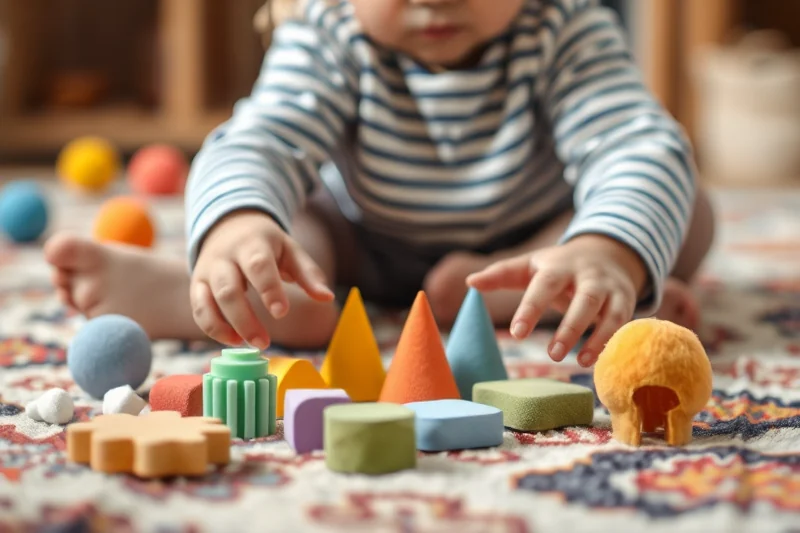
I’ve learned the hard way that messy play can be overwhelming — for both kids and parents. But with a little planning, the chaos can be contained. I start by setting up a small play area with a drop cloth or a waterproof mat. That way, I know I can clean up quickly without worrying about the mess spreading everywhere.
Another trick I use is to have all the cleanup materials ready before the play starts. I keep a small bucket with sponges, paper towels, and a spray bottle of water nearby. That way, when the mess starts, I can clean it up in under five minutes. I’ve also found that using a plastic bin with a lid helps contain the mess and keeps the materials safe from curious pets or siblings.
I’ve also noticed that allowing my children to help with cleanup not only makes the process faster but also teaches them responsibility. My son, for instance, loves using the spray bottle to clean the table. It’s a win-win — we keep things tidy, and he gets to feel like he’s contributing.
Mess is part of the process — but it doesn’t have to be part of the cleanup.
Related: Sensory play for babies 2026
Related: Sensory play for babies 2026
Related: Sensory play step by step
Related: Sensory play at home step by step
Related: Sensory play recipes without tools
Related: Sensory play how to choose
The Surprising Benefits of Quick Sensory Play for Toddlers
I’ve discovered that even short sensory play sessions can have long-term benefits. For example, I noticed that when my daughter played with a rice and bean bin, she began to sort and categorize items by size and color. This helped develop her fine motor skills and early math concepts like counting and grouping.
Sensory play also supports emotional development. I’ve seen my daughter become more confident as she explores different textures and materials. When she first started playing with slime, she was hesitant, but after a few sessions, she was making her own and showing it off to everyone.
What I’ve found most surprising is how sensory play can help with self-regulation. When my son is feeling overwhelmed or frustrated, he often turns to a sensory bin to calm himself down. It’s a simple but powerful way to help kids manage their emotions and build resilience.
When my son is feeling overwhelmed, I give him a sensory bin with soft items like foam or fabric. It helps him regulate his emotions and feel more in control.
“I remember the first time I realized the power of sensory play wasn’t just about keeping kids entertained — it was about sparking curiosity, building…”— TinyRomp editors
How to Choose the Right Materials for Quick Sensory Play
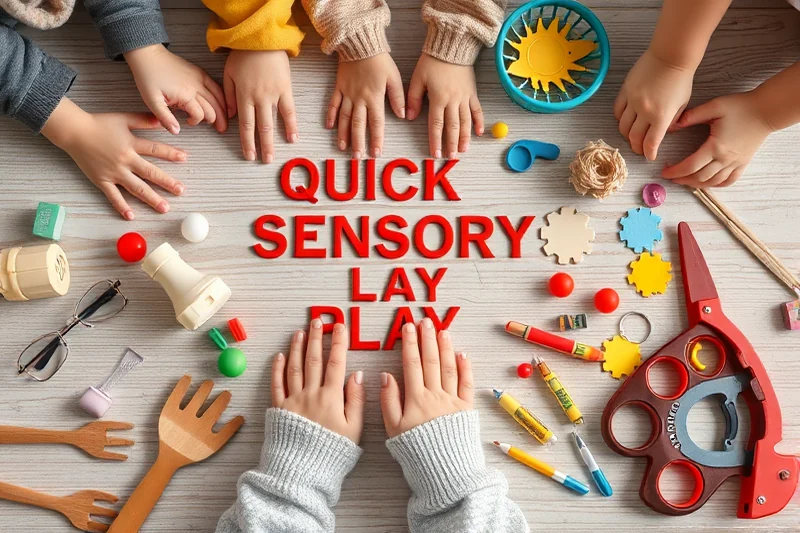
Not all materials are created equal with sensory play. I’ve found that natural materials like sand, rice, and beans are the most versatile and engaging. They’re also safe for younger children and easy to find at home or in the store.
Another thing to consider is the texture. I’ve noticed that rough, smooth, and squishy materials offer different sensory experiences. For example, playing with playdough helps develop fine motor skills, while sensory bins with different textures can encourage exploration and curiosity.
I also recommend rotating materials regularly to keep things interesting. My kids love when I introduce new items like pasta, feathers, or even small toys. It keeps the play fresh and engaging while also providing new learning opportunities.[2]
How to Make Sensory Play a Daily Habit — Without the Stress
I’ve found that setting aside 10-15 minutes a day for sensory play has made a huge difference in my child’s development and our family’s routine. It doesn’t take much time, but it’s enough to make a meaningful impact. The key is to be consistent and make it a part of your day, just like brushing teeth or reading a book.[3]
I’ve also started using sensory play as a way to transition between activities. For example, I’ll use a sensory bin after a meal or before bedtime to help my child unwind and focus. It’s a great way to signal the change in activity and keep things calm.
Another tip I’ve used is to involve the whole family in the sensory play. I’ve noticed that when my husband or I join in, it becomes a more engaging and enjoyable experience for the kids. It also helps build family bonding and shared learning moments.
⭐ Classic
Basic playdough with flour, salt, and water for a simple, safe option.
💰 Budget
Uses common pantry items like flour and salt, making it affordable and easy to make.
⚡ Extra-Fast
Skip kneading for a quicker, no-fuss version that’s perfect for busy days.
✨ Depth
Add essential oils or food coloring to enhance the sensory experience and learning opportunities.
🥗 Light
Use gluten-free flour and fewer calories for a lighter, healthy option that's still fun.
| The mistake | Why it happens | The fix |
|---|---|---|
| Using too much water | Too much water can make the dough too sticky and hard to work with, especially for younger children. | Add flour a little at a time until the dough becomes smooth and elastic. |
| Skipping the kneading step | Kneading helps the dough become firm and less likely to break apart, which is important for sensory play. | Take the time to knead the dough for at least 5 minutes to ensure it’s pliable and sturdy. |
| Using the wrong kind of flour | Not all flours work the same. For instance, cake flour can make the dough too soft and not hold up as well. | Stick to all-purpose flour or a gluten-free version for the best results. |
| Not storing it properly | If the dough isn’t stored in an airtight container, it can dry out and become hard to use again. | Always store the playdough in a sealed container or plastic bag to keep it fresh and ready for the next session. |
What You'll Need tap to check off
- 1 lb flour
- ½ cup salt
- water to taste
Method tap a step when done
- Combine flour and salt in a large bowl.
- Add water, a few tablespoons at a time, while mixing until a dough forms.
- Knead the dough for about 5 minutes until it’s smooth and elastic.
- Divide the dough into small balls and let them sit for 10 minutes to firm up.
- Store the dough in an airtight container or plastic bag for up to two weeks.
- Add food coloring or essential oils for extra sensory fun.
Key Facts
Quick Sensory Play Tips
Common Questions
Can I use this playdough for older kids?
How long does the playdough last?
What if my child has a gluten allergy?
Can I make this playdough without salt?
References
- Supporting Children's Learning Through Play - Childcare.gov (childcare.gov)
- PDF Sensory Play (dese.ade.arkansas.gov)
- The Impact of Sensory Materials on the Behavior of Children in Early ... (digitalcommons.cortland.edu)
- Clemyjontri Park | Park Authority - Fairfax County (fairfaxcounty.gov)
- Splish, Splash, Splat - Hooray for Messy Play! | HeadStart.gov (headstart.gov)
Cite this guide
TinyRomp (2026). Quick Sensory Play Tips. https://tinyromp.com/quick-sensory-play-tips/
Feel free to cite or share this guide.