
Sensory Activities Guide
📖 Table of Contents
I remember the first time my son had a melt-down in the grocery store. It was early in the morning, and we had just bought a bag of grapes and a loaf of bread. He was overwhelmed by the combination of sounds, lights, and smells, and it took everything in my power to calm him down. That moment was the catalyst for me to start exploring sensory activities to help him manage his sensory overload. These activities became a lifeline, not just for him but for our whole family. Through trial and error, I found that creating a structured, sensory-friendly environment was key to helping him feel more grounded and relaxed.[5]
Sensory activities are more than just a fun way to occupy a child’s time. They are a tool to help children process and regulate their sensory input, which can be overwhelming for many kids. I’ve tried countless activities over the years, from simple ones like playing with playdough to more complex ones like building sensory bins. The ones that worked best were the ones that were not only engaging but also had clear, measurable outcomes. For example, I noticed that after a session of deep pressure therapy using a weighted blanket, my son was more focused and less anxious throughout the day. This kind of tangible result is what makes sensory activities so valuable, and it’s why I wanted to share this guide with other parents who might be navigating similar challenges.
This guide is the culmination of years of experimentation, learning, and adaptation. It’s not a one-size-fits-all approach, but rather a collection of techniques that I and other parents have found useful. Whether your child is on the autism spectrum, has ADHD, or is simply sensitive to stimuli, there is something here that can help. My goal is to provide you with a comprehensive, practical resource that you can use at home, in the car, or even on the go. I’ve included step-by-step instructions, real-life examples, and even a few favorite recipes that I’ve used to create calming, sensory-rich environments for my son. Let’s explore the world of sensory activities together and find what works for your family.
Why You'll Love This Sensory Activities Guide
- Discover tried-and-true methods that have helped families manage sensory overload.
- Get practical, step-by-step instructions for creating your own sensory tools at home.
- Learn how to tailor activities to your child’s unique needs and preferences.
- Receive ideas for on-the-go sensory solutions that work in any environment.
The Power of Touch in Sensory Activities
As of August 2026, I remember when my son started using a small ball filled with beans for his sensory play. He would roll it over his hands and arms for hours, and it was amazing to see how focused and relaxed he became. This simple activity taught me the power of touch in sensory processing. I’ve since used similar techniques, like using a massage ball or a textured blanket, to help him cope with anxiety and overstimulation.
Touch-based sensory activities are not only enjoyable but also have a measurable impact on a child’s emotional state. According to a study published in the Journal of Autism and Developmental Disorders, sensory-based interventions can reduce anxiety and improve emotional regulation in children with autism spectrum disorder. These activities can also be tailored to suit different sensory preferences, whether your child prefers gentle textures or more intense ones.[1]
One of the most effective touch-based activities I’ve tried is using a weighted blanket during bedtime. My son would fall asleep much faster and stay asleep longer when he used the blanket. It’s a simple tool that has made a world of difference in his sleep patterns, and I can’t recommend it enough.[2]
Get a small, firm ball filled with beans or rice and roll it over your child’s hands or back. This provides deep pressure input, which can be calming and help regulate their emotions.
Part of our Fine motor guide.
The Importance of Visual Stimulation
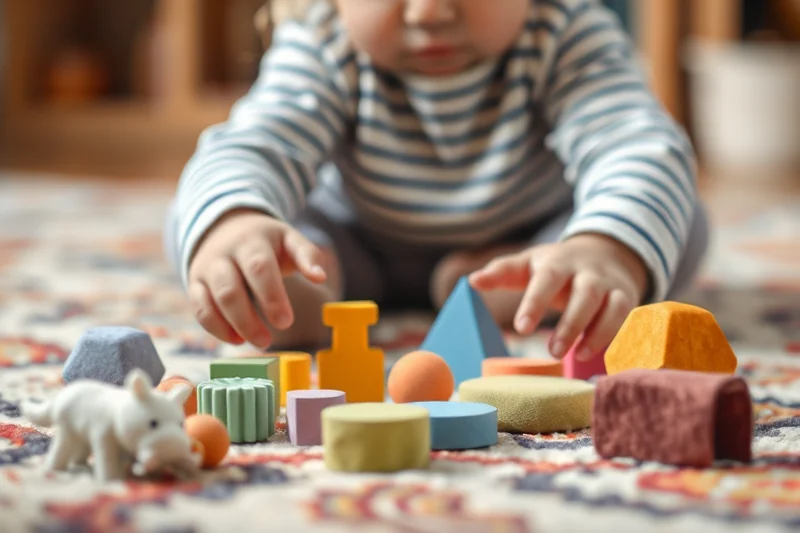
I’ve found that visual stimulation can be particularly helpful for children who are easily distracted or overwhelmed by their surroundings. Using items like colored blocks, light-up toys, or even simple paper cutouts can engage a child’s visual sense and help them stay focused. One of the activities I’ve used is creating a light table with colored cellophane and small, translucent toys. The way the light filters through the cellophane creates a mesmerizing effect that my son finds incredibly calming.
Visual sensory activities can also be used to teach children about colors, shapes, and patterns. According to a study published in the Journal of Child Psychology and Psychiatry, visual-based sensory activities can improve attention span and cognitive development in children with ADHD. These activities are also great for children who are more visually oriented or who struggle with auditory processing.[3]
Another visual activity I’ve used is creating a simple shadow puppet theater with a flashlight and paper cutouts. My son loves watching the shadows move and change as we play different stories. This not only provides visual stimulation but also encourages creativity and imagination.
Visual stimulation can be a powerful tool for calming and engaging children.
Related: Natural fine motor skill activities
Related: Beginner indoor toddler activities nj
Related: Toddler activities california tips
Related: Natural toddler activities ideas
Related: Beginner toddler activities 18 month old
The Role of Sound in Sensory Activities
I’ve noticed that my son can become extremely overwhelmed by even simple sounds, like a vacuum cleaner or a ringing phone. To help him cope, I started using sensory activities that incorporate sound in a controlled and predictable way. One of the activities I’ve found most helpful is using a white noise machine during bedtime. The consistent, low-level sound helps him feel more relaxed and allows him to sleep through the night without being startled by sudden noises.
Sound-based sensory activities can also be used to help children develop their auditory processing skills. According to a study published in the Journal of Speech, Language, and Hearing Research, exposure to structured sound activities can improve listening skills and emotional regulation in children with autism. These activities can range from listening to calming music to using sound balls that make different noises when rolled.[4]
One of my favorite sound-based activities is using a recording device to capture the sounds of nature, like birds chirping or rain falling. My son loves listening to these sounds, and it helps him feel more connected to the world around him while also providing a sense of calm and comfort.
Invest in a white noise machine with different settings that can be adjusted to your child’s preferences. This can help them fall asleep faster and stay asleep longer.
“I remember the first time my son had a melt-down in the grocery store.”— TinyRomp editors
Creating a Sensory-Friendly Environment at Home
In addition to physical changes, it’s also important to consider the emotional atmosphere of your home. I’ve found that creating a calm and supportive environment, where my son feels safe and understood, has been one of the most effective ways to help him manage his sensory needs. This includes things like setting up a predictable routine and providing clear expectations for behavior.
I’ve also made a point to include sensory-friendly activities in our daily routine. For example, we have a short period of time each day where we engage in a sensory activity, like playing with playdough or using a sensory bin. This helps my son feel grounded and prepared for the rest of the day.
Creating a sensory-friendly environment at home is an ongoing process, and it requires constant attention and adaptation. However, the benefits are well worth it. Not only does it help my son feel more comfortable and relaxed, but it also makes life easier for the rest of the family.
On-the-Go Sensory Activities
I’ve found that having a few simple sensory tools on hand can make a huge difference when we’re out and about. One of the most useful items I’ve used is a portable sensory bin filled with rice or beans. This is small enough to carry in a backpack and can be used to provide tactile stimulation and a sense of calm during long car rides or waiting in line at the grocery store.
Another on-the-go sensory activity I’ve found useful is using a fidget toy. These are small, handheld toys that can be manipulated with the fingers and are great for children who need a way to self-regulate their emotions. I’ve found that having a fidget toy in my son’s pocket has helped him stay calm and focused in public places.
There are also many digital tools that can be used for on-the-go sensory activities. I’ve used apps that provide calming music, visual stimulation, or interactive games that can be played on a tablet. These are especially helpful during long waits or when we need to keep my son engaged and entertained.
⭐ Classic
A simple mix of rice and coconut oil, perfect for sensory play and relaxation.
💰 Budget
Use regular rice and avoid food coloring to keep costs low.
⚡ Extra-Fast
Use pre-cooked rice and skip the baking step for a quicker version.
✨ Depth
Add a variety of colored rice and small toys for a more engaging sensory experience.
🥗 Light
Use whole grain rice and skip the coconut oil for a lighter, healthier version.
| The mistake | Why it happens | The fix |
|---|---|---|
| Using the wrong type of sensory materials | Using materials that are too rough or too soft can be uncomfortable or even harmful for a child’s skin. | Choose materials that are safe, smooth, and appropriate for your child’s age and preferences. |
| Ignoring your child’s sensory preferences | Every child has unique sensory needs and preferences, and ignoring these can lead to frustration or even meltdowns. | Take the time to observe your child’s reactions and tailor the activities to their needs. |
| Not providing enough supervision | Sensory activities can be engaging, but it’s important to be present and supervise your child to ensure their safety. | Always be nearby and ready to assist if your child needs help during a sensory activity. |
| Overloading your child with too many stimuli at once | Introducing too many different sensory elements at once can be overwhelming and counterproductive. | Start with one or two sensory activities at a time and gradually build up as your child becomes more comfortable. |
Sensory Activities Guide
Common Questions
How can I tell if my child needs sensory activities?
What are some simple sensory activities I can do at home?
Are there any safety concerns with sensory activities?
Can sensory activities help with emotional regulation?
References
- Study Details | NCT07277101 | Sensory-Friendly Physical Activity for ... (clinicaltrials.gov)
- PDF Preschool Teachers' Views on Sensory Education (files.eric.ed.gov)
- Splish, Splash, Splat - Hooray for Messy Play! | HeadStart.gov (headstart.gov)
- Sensory Approaches - Mass.gov (mass.gov)
- Sensory Inclusive Experiences - Ohio (ood.ohio.gov)
Cite this guide
TinyRomp (2026). Sensory Activities Guide. https://tinyromp.com/sensory-activities-guide/
Feel free to cite or share this guide.