
Minimalist Fine Motor Skills Activities For Preschoolers

📖 Table of Contents
When I first became a parent, I was overwhelmed by the sheer volume of activities and tools marketed as 'developmental' for my toddler. There were sensory bins for every letter of the alphabet, elaborate play dough kits, and an endless supply of 'educational' toys. But after a few months of trying them all, I realized that many of these were more about stimulation than skill-building. It was during a quiet moment, watching my son carefully thread a piece of yarn through a hole in a cardboard box that I had reused from a delivery, that I had an epiphany. The act of threading, even with the simplest of materials, was not only engaging but also a powerful fine motor exercise. That was the moment I decided to cut the clutter and focus on minimalist fine motor skills activities for preschoolers.[1]
Minimalist fine motor skills activities for preschoolers are not just about reducing the number of toys or materials in a child’s environment; they’re about fostering creativity, patience. Focus through simple, everyday materials. I started experimenting with things like paper clips, fabric scraps, and even buttons from old clothing. The results were surprising — my son not only showed more interest in these activities, but his hand-eye coordination and dexterity improved significantly. I realized that sometimes, less is more, and that the most impactful fine motor development comes from the child’s own curiosity and exploration, rather than from a carefully curated toy box.[2]
I began to compile a list of activities that required minimal materials, could be done with items I already had at home, and were both engaging and developmentally beneficial. These activities weren’t just about keeping my toddler busy; they were about giving him the tools to build confidence, independence, and the ability to manipulate objects with precision. Through this journey, I discovered that minimalist fine motor skills activities for preschoolers are not only budget-friendly, but they also encourage imaginative thinking and resourcefulness. It was a revelation that changed the way I approached playtime and learning with my son.[3]
Why You'll Love This Approach to Preschool Fine Motor Development
- Uses items you already have at home, saving you money and reducing clutter.
- Encourages creativity, imagination, and problem-solving through open-ended play.
- Builds hand-eye coordination, dexterity, and strength in small muscles.
- Provides a flexible, adaptable framework for learning and development.
Why Minimalist Fine Motor Activities Work
As of August 2026, I’ve seen how the absence of distractions can turn a simple activity into a powerful learning tool. When a child is presented with a few open-ended items — like a bowl of buttons and a box of empty containers — they are free to explore, experiment, and make their own discoveries. This kind of unstructured play builds confidence and independence, which are essential for fine motor development.[4]
One of the best parts about minimalist activities is that they allow children to take ownership of their learning. I noticed that my son would often spend more time and focus on an activity when he was the one to choose what to do, rather than following a scripted toy’s instructions. This shift in power not only increased his engagement but also helped him develop a stronger sense of agency and self-efficacy.[5]
From my experience, minimalist fine motor activities for preschoolers also help reduce sensory overload. In a world where children are constantly bombarded with colors, sounds, and movements, simplicity can be a gift. I’ve found that the more straightforward the activity, the more deeply my son can engage with it, and the more he learns.
Look around your home — buttons, paper clips, cardboard, and even pasta can be transformed into fine motor tools. The key is to let your child explore what they can do with these materials.
Part of our Toddler activities play based learning guide.
The Power of Simple Materials
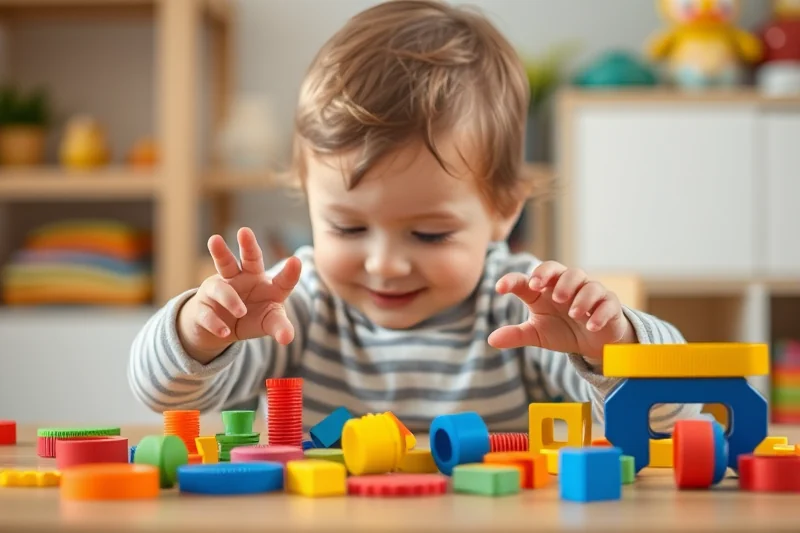
I’ve discovered that some of the most effective fine motor activities for preschoolers come from the most unassuming materials. My son once spent an entire afternoon sorting fabric scraps by color and texture — a task that required both dexterity and visual discrimination. I was amazed by how focused he was on this seemingly simple activity.
Another time, we used a cardboard box and some yarn to create a threading activity. He had to work carefully to push the yarn through the holes, and in doing so, he developed his pincer grasp and hand-eye coordination. These kinds of exercises, while simple, are incredibly beneficial for a child’s development.
I’ve also found that using everyday materials helps children see the value in what they have around them. Instead of constantly purchasing new items, we can repurpose and reimagine what’s already in our homes. It’s a lesson in sustainability and creativity, and it’s one that my son has picked up on instinctively.
The most powerful fine motor tools are often the ones we already have at home.
Related: Budget fine motor activity
Related: Indoor toddler activities near me
Related: Budget fine motor skills
Related: Sensory play equipment comparison
Related: Quick play based preschool curriculum
How to Create a Fine Motor Activity Kit
I started by collecting a few containers — one for buttons, one for paper clips, and another for fabric scraps. These were placed in a small bin that I kept in a corner of the playroom. I made sure to rotate the materials every few weeks to keep the activities fresh and engaging.
In addition to the containers, I kept a set of small baskets on the floor, each filled with different materials — like beads, pasta, and straws. This allowed my son to choose what he wanted to work with each day, giving him a sense of autonomy and control over his learning.
I also kept a few basic tools on hand, like a pair of small tongs, tweezers, and a magnifying glass. These helped him with more precise movements and also added an element of fun to the activities. The result was a simple, adaptable fine motor activity kit that kept my son engaged for hours.
To keep activities fresh and engaging, rotate the materials in your fine motor kit every few weeks. This helps maintain your child’s interest and curiosity.
“When I first became a parent, I was overwhelmed by the sheer volume of activities and tools marketed as 'developmental' for my toddler.”— TinyRomp editors
The Benefits of Open-Ended Play
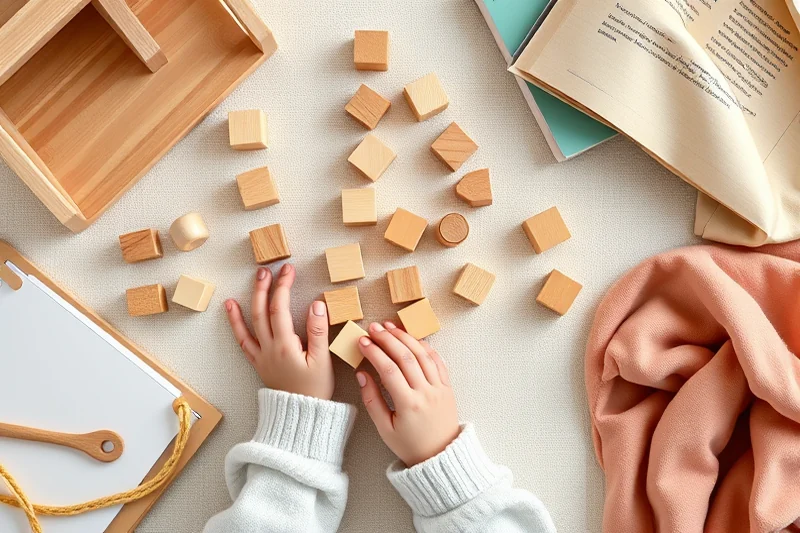
One of the most surprising benefits of minimalist fine motor activities for preschoolers is the way they promote open-ended play. Unlike structured toys that have a specific end goal, open-ended materials allow children to explore and create freely. This kind of play is not only more engaging, but it also helps children develop problem-solving skills and resilience.
I’ve noticed that when my son is given a box of materials and a challenge — like sorting them by size or shape — he often comes up with creative solutions that I never would have considered. This kind of thinking is invaluable for his development and it’s something I see less of in more structured play environments.
Another benefit of open-ended play is that it allows children to take their time and work at their own pace. There’s no pressure to complete a task quickly or to follow a set of instructions. Instead, the focus is on the process of exploration and discovery, which is exactly what helps build strong fine motor skills.
Making the Most of Everyday Moments
I’ve learned that fine motor skills development for preschoolers can be woven into everyday moments — whether it’s during mealtime, cleanup, or even while getting dressed. For example, my son has started using tongs to pick up cereal during breakfast, and this has helped improve his grip strength and coordination.
Another way I’ve incorporated fine motor activities into our daily routine is by involving him in simple chores, like sorting laundry or placing socks in a drawer. These activities may seem small, but they are actually excellent for developing dexterity and hand-eye coordination.
I’ve also noticed that my son is more engaged when he’s doing these activities with me. Whether it’s threading pasta through a hole or stacking blocks, these moments have become valuable opportunities for connection and learning. It’s a win-win for both of us.
⭐ Classic
The original minimalist kit with fabric scraps, buttons, and yarn for open-ended exploration.
💰 Budget
Uses household items like buttons from old shirts and cardboard boxes to save money.
⚡ Extra-Fast
A quick and easy setup that can be ready in under 10 minutes for spontaneous playtime.
✨ Depth
Adds more complexity with tools like tweezers and magnifying glasses for advanced motor development.
🥗 Light
Focuses on lightweight materials like pasta and fabric for gentle, low-stress activities.
| The mistake | Why it happens | The fix |
|---|---|---|
| Using too many materials at once. | Too many materials can overwhelm a child and reduce their focus on the activity. | Limit the number of materials to a few items at a time to keep the activity simple and engaging. |
| Not allowing the child to take the lead. | If the parent or caregiver is too involved, it can reduce the child’s sense of autonomy and engagement. | Let the child choose the materials and activities they want to explore. This helps build their confidence and interest in the tasks. |
| Ignoring the child’s pace. | Forcing the child to move too quickly or complete tasks can lead to frustration and disinterest. | Allow the child to take their time and work at their own pace. The focus should be on the process, not the outcome. |
| Not rotating the materials regularly. | Stagnant materials can lead to a loss of interest and engagement from the child. | Rotate the materials every few weeks to keep the activities fresh and exciting for your child. |
| Using unsafe materials. | Small or sharp items can pose a risk to the child’s safety. | Always ensure that the materials used are safe for the child to handle. Avoid small items that could be a choking hazard. |
What You'll Need tap to check off
- 1 lb Fabric scraps
- ½ cup Buttons
- ¼ cup Paper clips
- ¼ cup Yarn
- Cardboard boxes
Method tap a step when done
- Collect fabric scraps, buttons, paper clips, yarn, and cardboard boxes from around the home.
- Sort the materials into small containers — one for fabric scraps, one for buttons, and another for paper clips.
- Place the yarn and cardboard boxes in a separate basket for threading and hole-punching activities.
- Arrange all the containers and materials on a low table or in a bin for easy access by your child.
- Invite your child to explore the materials and create their own fine motor activities.
- Rotate the materials every few weeks to keep the activities fresh and engaging.
Key Facts
Minimalist Fine Motor Skills Activities For Preschoolers
Common Questions
What are the best materials for minimalist fine motor activities for preschoolers?
How often should I rotate the materials in my fine motor activity kit?
Are there any safety concerns with using household materials for fine motor activities?
What if my child isn’t interested in the activities?
References
- PDF Physical development: Activities for preschoolers (bkc-od-media.vmhost.psu.edu)
- Infant and Toddler Activity Pages: Roll the Ball (canr.msu.edu)
- PDF Materials Guide: ITERS-3 and ECERS-3 - Bright from the Start (decal.ga.gov)
- ECIPs - Physical and Movement - Minnesota (education.mn.gov)
- PDF Microsoft Word - Embedding_Motor_Activities_into_Inclusive_Preschools ... (files.eric.ed.gov)
Cite this guide
TinyRomp (2026). Minimalist Fine Motor Skills Activities For Preschoolers. https://tinyromp.com/minimalist-fine-motor-skills-activities-for-preschoolers/
Feel free to cite or share this guide.