
Minimalist Fine Motor Skill Activities
📖 Table of Contents
One Saturday morning, my daughter was sprawled on the floor, picking up tiny beads and stacking them into towers, her eyes wide with concentration. It was one of those quiet, unstructured moments where I realized how much fine motor development was happening without any toys or screens. I had always thought of fine motor skills as something that required elaborate setups — sensory bins, playdough, or expensive activity kits — but that day, I saw how simple, everyday items can be just as effective. This is the essence of minimalist fine motor skill activities: using what you have, in creative, intentional ways, to help your child grow.[1]
As a parent, I’ve spent countless hours researching and experimenting with different ways to support my children’s development. I’ve learned that fine motor skills — the ability to use small muscles in the hands and fingers — are crucial for everything from writing to buttoning a shirt. But the truth is, you don’t need a fancy playroom or a budget for educational tools to nurture these skills. My son, who’s now five, developed strong fine motor abilities through nothing more than threading pasta onto yarn, using tweezers to pick up cotton balls, and even sorting buttons from our laundry pile. These activities were simple, low-cost, and most importantly, deeply engaging for him.[2]
Minimalist fine motor skill activities aren’t just about saving money or reducing clutter — they’re about creating meaningful, focused play that helps children develop confidence and coordination. I’ve seen how these activities can be tailored to different ages and abilities. I’ve learned that the best ones are often the ones that require the least setup and the most creativity. Whether it’s using paper clips to build a bridge, sorting bottle caps by color, or drawing with crayons on the back of old envelopes, these small moments add up to big developmental leaps.[3]
Why You'll Love This Approach to Fine Motor Development
- It's budget-friendly and uses items you already have at home.
- It fosters creativity and independent problem-solving.
- It can be easily adapted for different ages and developmental stages.
- It creates a calm, focused environment for learning and play.
The Power of Repurposed Materials
As of October 2026, I’ve filled my kitchen counter with small containers of cotton balls, pasta, and paper clips, all of which my kids use for various activities. One of my favorites is threading pasta onto yarn. It requires concentration, patience, and the use of small fingers. I’ve watched my daughter’s confidence grow as she moved from using her whole hand to grip the yarn to using just her thumb and index finger to thread each piece carefully.[4]
We’ve also used paper clips to create ‘bridges’ by placing them on a board to see how many can be supported before it collapses. The kids love the challenge, and it gives them a way to explore physics and engineering in a hands-on way. Best of all, these materials are easy to find, inexpensive, and can be used for multiple activities over time.[5]
I’ve even used old envelopes for drawing and coloring, which teaches my kids about texture and how different surfaces affect the way crayons move. The best part is that these materials don’t take up much space and are easy to store. This approach not only saves money but also helps kids become more resourceful with what’s around them.
Instead of buying new materials, look around your home for items you can use in fine motor activities. Cotton balls, pasta, paper clips, and buttons are all great options.
Part of our Toddler activities play based learning guide.
The Importance of Hands-On Play

I’ve found that the most effective fine motor activities are the ones that require direct physical interaction with objects. My son, for instance, loves using tweezers to pick up cotton balls and place them into small cups. This activity strengthens his pincer grasp and improves his hand-eye coordination. It’s also a great way to practice focus and patience, which are important skills at any age.
I’ve noticed that when kids are engaged in hands-on play, they’re more likely to stay focused for longer periods. This is especially true when they’re using their hands to manipulate objects in ways that feel meaningful. For example, I’ve had my daughter sort bottle caps by color and size, which not only helps her develop fine motor skills but also teaches her about categorization and sorting.
One of the best parts of this approach is that it’s so adaptable. Whether it’s threading, sorting, or picking up small objects, there are endless ways to keep kids engaged and learning without any special equipment.
Hands-on play is the foundation of fine motor development — it’s where the magic happens.
Related: Cheap play based learning examples in early childhood
How to Turn Everyday Items into Learning Tools
I’ve turned our laundry room into an unexpected classroom by using buttons and yarn for various activities. My daughter loves threading buttons onto yarn, which helps her develop the pincer grasp and improve her hand strength. She also enjoys sorting buttons by size and color, which adds an extra layer of cognitive development to the activity.
I’ve noticed that even simple tools like tweezers and tongs can make a big difference. My son, for example, has been using tongs to pick up small objects, which has helped him build the strength and control needed for tasks like opening jars and using utensils. These tools are easy to find and can be used for a variety of activities.
I’ve also experimented with using cotton balls and cotton swabs for activities that require fine motor control. My daughter has been using cotton swabs to pick up small objects and place them in containers, which has been a great way to build her dexterity and precision. The best part is that these activities are all low-cost and can be done with materials you already have at home.
Turn buttons, yarn, and cotton balls into learning tools by using them for threading, sorting, and picking up small objects. These activities are great for building fine motor skills and hand strength.
“One Saturday morning, my daughter was sprawled on the floor, picking up tiny beads and stacking them into towers, her eyes wide with concentration.”— TinyRomp editors
Related: Playing preschool curriculum
Making the Most of Simple Tools
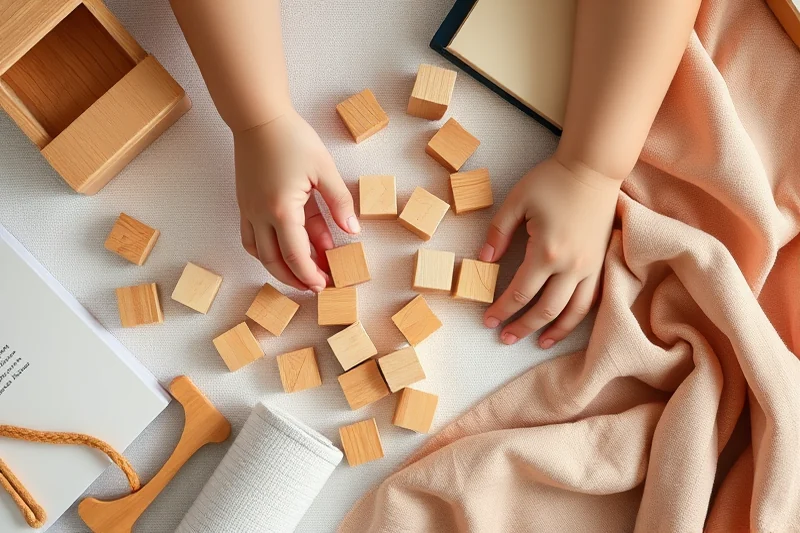
I’ve found that simple tools like tweezers and tongs can be used in a variety of ways to support fine motor development. My son, for instance, has been using tweezers to pick up small objects like cotton balls and paper clips. Has helped him build the strength and control needed for tasks like opening jars and using utensils. These tools are easy to find and can be used for a variety of activities.
I’ve noticed that using these tools can also help kids develop a better sense of hand-eye coordination. My daughter, for example, has been using tongs to pick up small objects and place them in containers, which has been a great way to build her dexterity and precision. The best part is that these activities are all low-cost and can be done with materials you already have at home.
I’ve also experimented with using tongs and tweezers for sorting activities. My son has been using tongs to sort bottle caps by size and color, which has been a great way to build his fine motor skills and cognitive abilities at the same time.
Related: Affordable sensory play for 2 year old
The Benefits of a Minimalist Approach
I’ve found that a minimalist approach to fine motor activities can help reduce clutter and focus on the essentials. Instead of having a room full of toys and tools, I’ve found that using a few simple items can be just as effective. This approach not only helps keep the house tidy but also allows kids to focus more on the activity itself rather than on the materials they’re using.
I’ve noticed that when I keep the number of materials limited, my kids are more likely to engage in the activities for longer periods. This is especially true when they’re using their hands to manipulate objects in ways that feel meaningful. For example, I’ve had my daughter sort bottle caps by color and size, which not only helps her develop fine motor skills but also teaches her about categorization and sorting.
⭐ Classic
The original recipe with pasta and yarn — perfect for building fine motor skills.
💰 Budget
Use leftover pasta and yarn from your home to keep costs low.
⚡ Extra-Fast
Simplify the steps and use pre-cut yarn for a quicker activity.
✨ Depth
Add sorting activities with different colors and sizes to increase complexity.
🥗 Light
Use cotton balls or buttons instead of pasta for a lighter, gentler activity.
| The mistake | Why it happens | The fix |
|---|---|---|
| Using too many materials at once | Too many materials can overwhelm your child and make it harder for them to focus on the activity. | Limit the number of materials to a few simple items to keep the activity manageable and engaging. |
| Not providing enough guidance | Without guidance, your child may not know how to use the materials or what they’re supposed to be doing. | Offer clear instructions and demonstrate how to use the materials before letting your child try on their own. |
| Choosing the wrong materials for your child’s age | Choosing the wrong materials can make the activity too difficult or too easy for your child, which can reduce their engagement and learning. | |
| Not cleaning up after the activity | Leaving materials scattered can create a mess and make it harder to use them again in the future. | Make sure to clean up after the activity by placing all materials back into their containers for future use. |
What You'll Need tap to check off
- 1 lb Pasta (any shape)
- ½ cup Yarn (in various colors)
- Small bowls or containers (for sorting)
Method tap a step when done
- Choose a variety of pasta shapes, such as penne, macaroni, or small spaghetti, and sort them by size.
- Cut the yarn into manageable lengths and place it in a small bowl or container.
- Give the pasta and yarn to your child and encourage them to thread the pasta onto the yarn.
- Once the pasta is threaded, have your child place the finished pieces into small bowls or containers for sorting.
- Repeat the activity with different pasta shapes and colors of yarn to keep it engaging.
- Once the activity is complete, clean up by placing the pasta and yarn back into their respective containers for future use.
Key Facts
Related: Splash learning for kids
Minimalist Fine Motor Skill Activities
Related: Budget play based kindergarten curriculum
Common Questions
What are the best items to use for minimalist fine motor activities?
How can I make these activities more engaging for my child?
What age range is this approach best suited for?
How can I incorporate these activities into my daily routine?
References
- Fine Motor Skills Research Papers - Academia.edu (academia.edu)
- Building fine motor skills and why it matters - MSU Extension (canr.msu.edu)
- Supporting Children’s Learning Through Play - Childcare.gov (childcare.gov)
- EARLY CARE AND EDUCATION Physical Activity Toolkit for ... (fsnep.ucdavis.edu)
- Fine Motor Skills Worksheets - DID YOU KNOW! (go-new.uta.edu)
Cite this guide
TinyRomp (2026). Minimalist Fine Motor Skill Activities. https://tinyromp.com/minimalist-fine-motor-skill-activities/
Feel free to cite or share this guide.