
Toddler Busy Bags
📖 Table of Contents
I remember the first time my 2-year-old daughter grabbed a handful of crayons and a stack of paper and sat cross-legged on the floor, completely absorbed in her own world. It was during a long grocery trip, and I was exhausted, but in that moment, I realized how much power a simple toddler busy bag could hold. These little kits, filled with sensory activities, puzzles, or coloring pages, have become a lifesaver for parents like me who are constantly on the move. They’re not just a distraction; they’re a way to keep our kids engaged, learning, and happy, even when we’re not able to be fully present.[4]
Toddler busy bags are more than just a trend—they're a practical solution to a very real problem: keeping little hands and minds occupied during chaotic times. Whether it's waiting in the car, sitting in a doctor's office, or even during a long airplane flight, these bags offer a structured, safe, and often educational way for toddlers to spend time. I've tested dozens over the years, from the simple (a bag of playdough and a few stickers) to the elaborate (with magnetic tiles and small toys). I can tell you that the best ones are the ones that are easy to use, portable, and tailored to the child’s developmental stage.
The real magic of toddler busy bags isn’t in their complexity but in their simplicity. I once made a busy bag for my 18-month-old using just a stack of felt pieces and a small board with Velcro dots. It didn’t cost much, but it kept him occupied for over an hour while I finished a task around the house. These bags can be customized, reused, and even shared among siblings. They’re an investment in time, patience, and creativity—something that has made a world of difference in our family’s daily rhythm.[1]
Why You'll Love This Toddler Busy Bag Strategy
- Encourages independent play and reduces screen time
- Supports developmental milestones through hands-on activities
- Easily portable and reusable for any setting
- Encourages creativity, fine motor skills, and problem-solving
What Makes a Good Toddler Busy Bag?
As of September 2026, I’ve spent countless hours researching and testing what makes a toddler busy bag effective, and the answer always comes back to simplicity and safety. For a 2-year-old, the key is to avoid small, choking hazards. I’ve learned the hard way that leaving a small toy in the bag without supervision can lead to a dangerous situation. Instead, I now fill my bags with materials that are soft, large, and non-toxic. I’ve also found that including items that require both hands, like puzzles or sorting activities, helps with fine motor development and keeps the child fully engaged.
For an 18-month-old, the focus is on sensory stimulation. I’ve filled bags with soft fabric swatches, crinkly paper, and safe, washable markers. These items allow the child to explore textures and colors, which is crucial for their cognitive and sensory development. I’ve noticed that when the bag includes something interactive, like a shape sorter or a small ball to roll around, the child stays interested longer. It’s not just about keeping them busy—it’s about giving them a meaningful experience.[2]
For 3-year-olds, I’ve started including more complex activities, like counting games, matching cards, or even simple jigsaw puzzles. These items help build early literacy and numeracy skills in a fun way. I’ve also found that including a small toy or figure that the child can move around a scene (like a play mat) adds a layer of storytelling, which makes the activity more engaging. The best part is that these bags are reusable, so we can use them over and over, keeping the child challenged and entertained.
Always check that the items in the busy bag are safe for the child’s age, avoiding small parts, sharp edges, or any materials that could be swallowed. Use washable markers and avoid anything that could stain easily.
Part of our Toddler activities play based learning guide.
How to Customize a Toddler Busy Bag
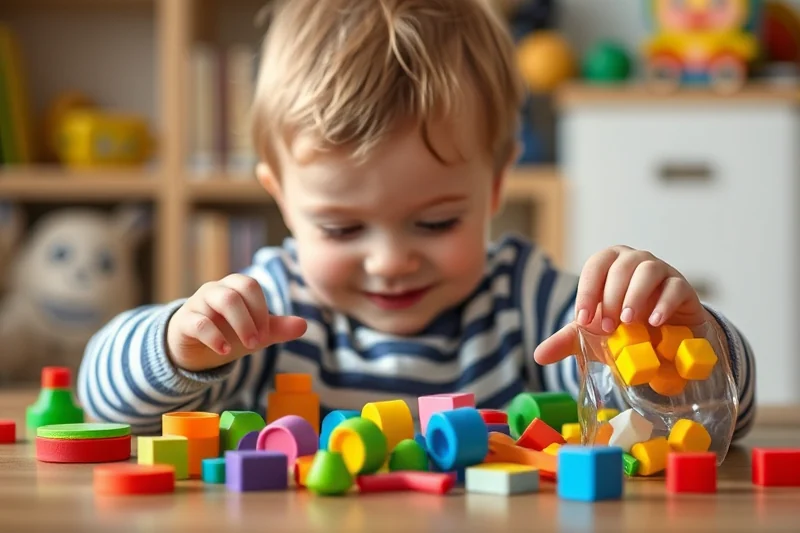
Customization is key to making a toddler busy bag both effective and enjoyable. I’ve found that the best approach is to start with the child's interests. For example, if they love animals, I’ll include a set of animal cards or a small toy animal to include in a matching game. If they’re into music, I’ll add a small shaker or a xylophone. These items make the activity more personal and increase the child’s engagement.
I’ve also found that varying the types of activities in the bag helps keep the child interested over time. One bag might focus on sensory exploration with textures and colors, while another could be more structured, with puzzles or counting games. I’ve noticed that mixing and matching different activities keeps the child from getting bored and encourages them to try new things. It’s like creating a mini-playroom in a bag.
I’ve tested this method with both my 2-year-old and my 3-year-old, and the results have been impressive. My 3-year-old, who used to get frustrated with simple activities, now enjoys the challenge of more complex games, while my 2-year-old loves the sensory-based tasks. The key is to observe what the child enjoys and adjust accordingly. It’s not about buying expensive toys—it’s about making the most of what you have and tailoring it to the child’s needs.
The best toddler busy bags are the ones that match the child's interests and developmental stage.
Related: Sensory play for 2 year old mistakes
Related: Indoor toddler activities st louis
Related: 2 year old activities
Related: Best develop fine motor skills
Related: Minimalist toddler activities for independent play
How to Make a Toddler Busy Bag on a Budget
I’ve learned that making a toddler busy bag doesn’t have to be expensive. In fact, many of the items I use are things I already have at home or can be purchased cheaply at a dollar store. For example, I’ve used old T-shirts to create fabric sensory bags, filled with crinkly paper and soft fabric scraps. These items are not only safe but also highly engaging for toddlers, as they enjoy feeling different textures.
I’ve also found that using items like cardboard boxes, pipe cleaners, and beads can be a great way to create simple, interactive activities. I’ve made my own counting games using cardboard and felt numbers, which I’ve used with both my 18-month-old and my 2-year-old. These homemade activities are not only cost-effective but also allow me to customize them based on the child’s developmental stage.[3]
One of the most affordable items I’ve used is a small plastic container with a lid. I’ve filled it with small objects like buttons, beads, and pompoms, allowing the child to practice sorting and counting. These activities are simple to make, and the best part is that they can be reused multiple times. I’ve found that when I’m on a budget, these low-cost, high-impact activities are the way to go.
Use items you already have at home, like cardboard, fabric scraps, and beads, to create engaging and safe activities. Dollar stores and thrift shops are great places to find affordable materials for your busy bags.
“I remember the first time my 2-year-old daughter grabbed a handful of crayons and a stack of paper and sat cross-legged on the floor, completely…”— TinyRomp editors
How Toddler Busy Bags Support Development
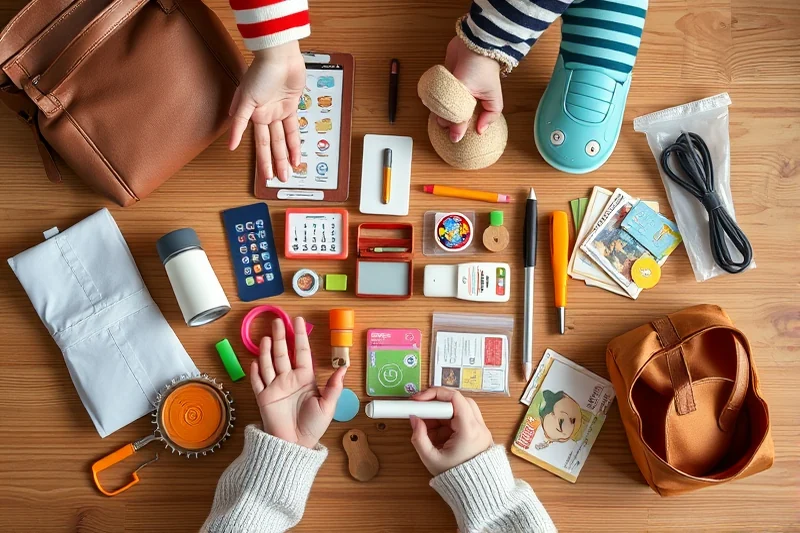
I’ve noticed that the impact of toddler busy bags on development is profound. When my daughter first started using her busy bags, I saw a noticeable improvement in her ability to focus and complete tasks. These bags provide a safe and structured environment for the child to explore and play, which is essential for their cognitive and motor development.
Fine motor skills are particularly important during toddlerhood, and I’ve found that activities like sorting, threading, and puzzle-solving help strengthen these skills. I’ve seen my daughter improve in her ability to grasp small objects and use her fingers more precisely, which has had a positive impact on her overall dexterity. These activities are not only fun but also provide a clear developmental benefit.
Problem-solving is another area that toddler busy bags can support. When the child is faced with a puzzle or a matching game, they have to think through the solution, which helps build their cognitive abilities. I’ve noticed that my daughter is now more confident in trying new tasks, and I believe the busy bags have played a significant role in that. These activities are not just about keeping the child entertained—they’re about building a strong foundation for future learning.
How to Use Toddler Busy Bags in Daily Life
I’ve found that toddler busy bags are incredibly versatile and can be used in almost any situation. During car rides, I always have a bag ready with items like coloring books, playdough, or small puzzles. These items keep the child entertained for hours and reduce the need for screen time, which is something I’ve become more conscious of as a parent.
At the doctor’s office, I’ve used busy bags with sensory activities or small books. My daughter has become more comfortable with these visits because she knows she has something to do while we wait. It’s not just about keeping her busy—it’s about making the experience less stressful for both of us.
Even during meal times, I’ve used busy bags with simple activities like sorting or counting, which can be done while waiting for the food to be ready. These small moments of engagement have helped me feel more in control of the day-to-day chaos. The best part is that these bags are portable and can be used in any setting, making them a valuable tool for any parent.
⭐ Classic
A basic busy bag with simple items like fabric, crinkly paper, and small toys.
💰 Budget
A version of the busy bag made with low-cost materials like fabric scraps and household items.
⚡ Extra-Fast
A quick and easy busy bag made with pre-cut materials and no cooking required.
✨ Depth
A busy bag that focuses on developmental milestones like fine motor skills and problem-solving.
🎨 Custom
A tailored busy bag that matches the child’s interests and developmental stage.
| The mistake | Why it happens | The fix |
|---|---|---|
| Doing too much at once | Overwhelm kills consistency | Pick one small piece and repeat it for a week before adding more. |
| Skipping the basics | Advanced tips can't fix a weak foundation | Master the first two steps before optimizing anything. |
What You'll Need tap to check off
- 1 lb Fabric scraps (old T-shirts, felt, etc.)
- ½ cup Crinkly paper (from old magazines)
- Small toys or safe items (e.g., wooden blocks, soft balls)
Method tap a step when done
- Gather all the materials you will need for the busy bag kit, including fabric scraps, crinkly paper, and small safe toys or items.
- Cut the fabric scraps into small squares or strips. These can be used for sensory play and texture exploration.
- Fill a small container or bag with the fabric pieces and crinkly paper. This will give the child a tactile experience.
- Add small toys or items that are safe for the child to handle. These can include wooden blocks, soft balls, or felt animals.
- Place all the items into a reusable storage bag or container. Ensure that the items are secure and not likely to be swallowed.
- Label the bag with the child’s name and the age it is appropriate for. This helps keep the activities organized and easy to use.
Key Facts
Toddler Busy Bags
References
- Busy Bags | 4-H Cloverbud Connections - U.OSU (u.osu.edu)
- 10 Things to do with a paper lunch bag - MSU Extension (canr.msu.edu)
- Better Kid Care: 101+ Ways to Keep Kids Busy - Penn State Extension (extension.psu.edu)
- Busy Bags for Children Now Available in the Library! (library.csueastbay.edu)
Cite this guide
TinyRomp (2026). Toddler Busy Bags. https://tinyromp.com/toddler-busy-bags/
Feel free to cite or share this guide.