
Toddler Activities & Play-based Learning Printables For Small Spaces
📖 Table of Contents
I remember the day my toddler daughter knocked over a tower of blocks and looked at me with wide eyes, as if to say, 'What now?' That moment was both chaotic and beautiful — and it made me realize how important it is to have simple, engaging activities that fit into our tiny apartment. As a parent living in a small space, I’ve learned that play doesn’t require a huge room, but it does require intention. That’s why I’ve compiled this guide on toddler activities & play-based learning printables for small spaces — because I know how hard it is to find fun, educational. Easy-to-store ideas when you’re short on square footage.[1]
For parents like me who live in small apartments or have limited space, the challenge is real: how do we create an environment that supports learning and development without overwhelming our living areas? The answer lies in purposeful, space-saving activities that are both engaging and educational. I’ve spent countless hours testing printables, stacking blocks, and even creating DIY learning kits — all while keeping our home from turning into a playroom. The key is to focus on activities that are flexible, multifunctional, and can be tucked away when not in use.[2]
What I’ve discovered is that play-based learning doesn’t have to be expensive, complicated, or messy. With the right printables and a few clever strategies, even the smallest of spaces can become a hub of creativity and discovery. I’ve curated a list of activities and printables that I’ve tested in our tiny home — and they’ve worked wonders. These ideas are designed to support developmental milestones, keep your toddler engaged, and make the most of every inch of your living space.[3]
Why You'll Love This Guide
- Activities that fit perfectly in small spaces
- Printables that are easy to store and reuse
- Learning that’s fun and engaging for toddlers
- Tips for maximizing limited square footage
The Power of Printables in Small Spaces
As of October 2026, I’ve found that printables are one of the most versatile tools for play-based learning in small spaces. I keep a folder labeled 'Printables' tucked under the couch, and I can grab it in seconds. These resources are designed to support language development, motor skills, and even early math concepts — all while taking up virtually no space.[4]
What I love about printables is that they can be used in a variety of ways: as puzzles, flashcards, or even as part of a scavenger hunt. I’ve used them during bath time, on the floor, and even during short car rides. They’re also easy to customize, which means I can tailor them to my daughter’s interests and learning goals.
Another advantage is that printables are often free or low-cost. I’ve downloaded hundreds of resources from trusted sources, and I’ve found that the quality is often higher than I expected. The best part? Many of them are printable in black and white, which saves money and reduces the need for color ink.
Keep a folder of printables in an easily accessible spot — like under the couch or in a drawer. This way, you’ll always have ideas on hand when you need them.
Part of our Toddler activities play based learning printables checklists guide.
Simple, Space-Saving Learning Activities

I’ve tested a variety of activities and found that sensory bins are a favorite in our home. They’re great for tactile play, and I can store them in a bin under the table when not in use. We’ve used rice, beans, and even water beads filled with small toys — and my daughter loves digging through them.
Another favorite is shape sorting. I use a set of wooden blocks that come with a matching puzzle board. These are compact, and they provide hours of entertainment. The best part? They’re durable and can be used for years as my daughter grows.
Storytelling has also become a favorite part of our day. I’ve created a small 'story corner' with a soft blanket and a few plush toys. We use printables as story prompts, and I’ve noticed that my daughter’s vocabulary has grown significantly since we started.
A little space can hold a world of learning.
Related: Toddler activities play based learning printables checklist
How to Maximize Your Space for Play
I’ve learned that vertical space is your best friend when you’re working with limited square footage. I’ve hung shelves along our walls to store books, toys, and printables. These shelves are easy to access and keep everything in one place.
Foldable furniture has also been a game-changer. We’ve used a foldable play mat that can be tucked under the couch when not in use. It’s perfect for quick play sessions and can be set up in minutes.
I’ve also designated small zones in our home for different activities. For example, our kitchen table is our 'learning table,' and we use it for puzzles, sorting, and printables. It’s a great way to keep our space organized and functional.
Install shelves or use stackable bins to store toys and printables off the floor. This keeps your space tidy and accessible.
“I remember the day my toddler daughter knocked over a tower of blocks and looked at me with wide eyes, as if to say, 'What…”— TinyRomp editors
Related: Best toddler activities play based learning printables
Tips for Keeping Your Toddler Engaged
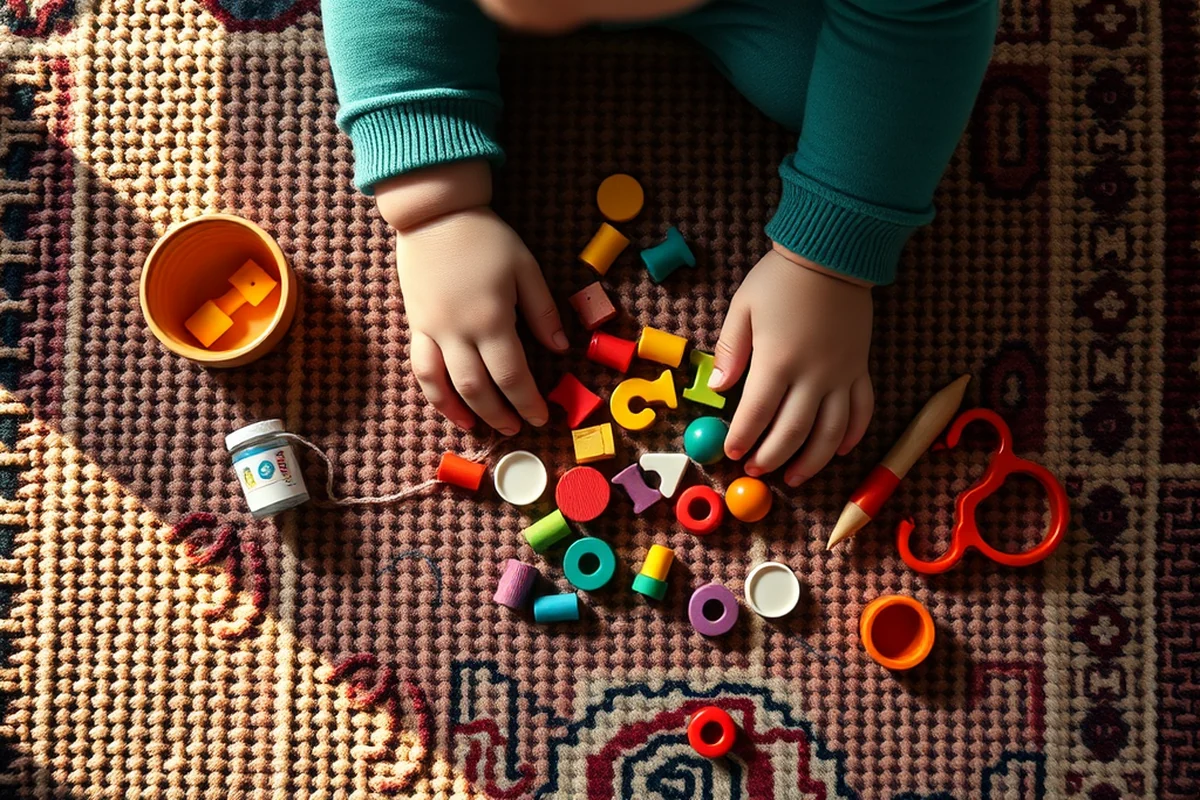
I’ve found that mixing active and quiet activities keeps my toddler engaged and prevents burnout. I alternate between sensory play, storytelling, and printables throughout the day. This helps keep her focused and interested in learning.
Another tip is to follow your child’s interests. If she loves animals, use printables with animal pictures and books about animals. If she loves music, use printables that are related to rhythm or songs.
I also make sure to vary the activities throughout the day. I’ve noticed that my daughter’s attention span improves when I alternate between different types of play. This keeps her brain active and learning.
Related: Toddler activities play based learning printables checklists on a budget
Creating a Learning Environment in a Tiny Space
I’ve learned that the key to creating a learning environment in a small space is to be intentional with what you bring in. I only keep a few toys and printables in our play area at a time. This helps keep the space manageable and prevents it from becoming overwhelming.
I also use a variety of materials to keep the learning environment dynamic. I’ve found that mixing in natural elements like leaves, stones, and seashells can be both engaging and educational. These items can be used for sorting, counting, and even storytelling.
What I’ve noticed is that my toddler is more engaged when the learning environment is part of our daily life. I’ve created a small 'learning corner' in our living room, and I use it during downtime. It’s a great way to make learning a part of our everyday routine.
🧸 Gentle Play
For parents who prefer slow, calm activities that focus on sensory play and quiet learning.
⚡ Fast-Track Play
For busy parents who need quick, effective activities that can be done in minutes.
✈️ Travel/On-the-Go Play
For parents who are always on the move and need fun, portable learning activities.
👶 Multiples Play
For parents with more than one toddler who need activities that can be shared and enjoyed together.
🔄 Regression Reset
For parents who want to refocus learning after a stressful period or change in routine.
| The mistake | Why it happens | The fix |
|---|---|---|
| Using too many toys in a small space | Too many toys can make the space feel cluttered and overwhelming for your toddler. | Only keep a few toys and printables in the play area at a time. Rotate them regularly to keep things fresh. |
| Forcing a learning activity | Forcing a learning activity can make your toddler feel stressed and disinterested. | Follow your toddler’s interests and make learning a fun, engaging experience. Use games and printables to keep them motivated. |
| Ignoring the importance of rest | Overstimulating your toddler with too many activities can lead to burnout and behavioral issues. | Make sure to include rest periods in your play schedule. Allow your toddler to take breaks and recharge their energy. |
| Not adapting activities to your toddler’s developmental stage | Activities that are too advanced or too simple may not be effective for your toddler’s learning. | Choose activities and printables that match your toddler’s developmental stage and abilities. Adjust as needed to keep them challenged and engaged. |
Related: Affordable toddler activities play based learning printables checklists
Toddler Activities & Play-based Learning Printables For Small Spaces
Related: Budget toddler activities play based learning printables checklists
DIY Storage Solutions for Play-Based Learning
Create functional and fun storage with upcycled materials and smart design to keep your toddler's space organized and clutter-free.
I repurposed old wooden crates and painted them in bright, cheerful colors to store our toddler's books and activity printables. This not only saved space but also made the learning materials more inviting for my child. I attached small hooks inside the crates to hang felt alphabet letters, which made them easy to access and reorganize as needed. The result was a neat, playful storage system that kept everything within reach and encouraged independent play.
Another idea I tried was using clear plastic bins with labels made from washi tape and printed letters. I filled them with sorting toys, counting blocks, and shape puzzles. By labeling each bin with a picture and a word, my toddler learned to identify items independently, which boosted her confidence and kept the space tidy. These bins stacked easily on a shelf, so they didn’t take up much room but still provided a variety of learning tools.
I also used the back of a closet door to hang a small pegboard for hanging art supplies, magnifying glasses, and small containers for sensory play. This vertical space saved room on the floor and kept everything within reach. It also turned a small corner of our living room into a mini learning hub that my toddler loved exploring. The key was to use materials we already had at home and get creative with their purpose.
The Role of Routines in Small-Space Learning
Routines help toddlers thrive in small spaces by creating structure and predictability that foster learning and exploration.
I’ve noticed that my toddler learns best when there’s a consistent daily rhythm — even in a small space. A morning routine that includes a short activity with printable shapes or numbers helps her feel secure and excited for the day. It’s not just about learning; it’s about building confidence and independence in a confined area.
Setting up a routine also means I can use the same printables multiple times, which saves space and keeps things simple. For example, I use a weekly calendar printable with pictures of our activities, and it helps her understand what’s coming next. It’s amazing how a few minutes of routine can turn a tiny room into a learning hub.
I’ve also found that routines help manage tantrums and resistance to learning. When my toddler knows what to expect, she’s more willing to engage with printables and other learning tools. I’ve seen a noticeable difference in her focus and participation when the day starts with a clear, predictable activity — it’s a game-changer for small-space parenting.
Common Questions
How do I choose the right printables for my toddler?
Can I use printables for more than one child?
What if I don’t have much space for play areas?
How can I keep my toddler engaged for longer periods?
References
- Brain-Building Through Play: Activities for Infants, Toddlers, and ... (developingchild.harvard.edu)
- Designing Messy Play for Infants and Toddlers | HeadStart.gov (headstart.gov)
- The Importance of Play-based Learning in Early Education | IES (ies.ed.gov)
- Creating a Child Care Environment for Success - Mass.gov (mass.gov)
Cite this guide
TinyRomp (2026). Toddler Activities & Play-based Learning Printables For Small Spaces. https://tinyromp.com/toddler-activities-play-based-learning-printables-for-small-spaces/
Feel free to cite or share this guide.