
Build Fine Motor Skills

📖 Table of Contents
- Why Fine Motor Skills Matter in Early Childhood
- The Science Behind Fine Motor Development
- Creative Activities to Build Fine Motor Skills at Home
- The Role of Fine Motor Skills in Writing and Handwriting
- How to Build Fine Motor Skills for Kindergarten and Beyond
- Make It Your Way
- Frequently Asked Questions
- The Printable Activity Plan
I remember the moment my toddler son, then 2 years old, tried to hold a pencil for the first time. His fingers curled tightly around the wooden stick, and his grip was awkward, almost comical. It was the first time I realized how important it was to build fine motor skills — not just for handwriting, but for everything from tying shoes to using scissors. Fine motor skills are the tiny movements that control our hands and fingers, and they’re the foundation for so many things in life. As a parent, I quickly learned that building fine motor skills at home isn’t just about play; it’s about intentional practice.[5]
Over the years, I’ve spent countless hours researching, experimenting, and even getting my hands dirty with everything from sensory bins to DIY obstacle courses. What I discovered was that building fine motor skills in preschoolers doesn’t require a lot of money or space — it just requires creativity, consistency, and the right tools. Whether you’re working on building fine motor skills for writing or simply looking to improve fine motor skills in young children, there are practical, everyday activities that can make a huge difference. The key is to make it fun.
I’ve tried everything from using playdough to threading beads, and even setting up a little mini gym with clothespins and tweezers. It’s amazing how much a child can develop in a few weeks with the right approach. For those of you wondering how to build fine motor skills at home, or how to build fine motor skills in preschoolers, I’ve found that the most effective methods are often the simplest. You don’t need flash or frills — just a few well-chosen activities and a little patience can lead to big improvements in fine motor development.
Why You'll Love This Guide to Building Fine Motor Skills
- Simple, at-home activities that don’t require expensive equipment or special training.
- Activities that can be tailored for children of all ages, from toddlers to preschoolers.
- Real-life results from parents who have seen dramatic improvements in their kids’ dexterity and confidence.
- Tips that help parents understand the science behind fine motor development and how to apply it.
Why Fine Motor Skills Matter in Early Childhood
As of August 2026, Fine motor skills are the small, precise movements that help a child control their hands and fingers. These skills are foundational for tasks like writing, buttoning clothes, and using utensils. For preschoolers, building fine motor skills isn’t just about play — it’s about preparing for the future. Studies show that children who have strong fine motor skills are more likely to succeed in school, especially with reading and writing.[1]
I remember when my son struggled to hold a crayon and color within the lines. It wasn’t just about his grip; it was about the strength and coordination of his fingers. After a few weeks of working on activities that required pinching and grasping, like using tweezers to pick up small beads, his handwriting improved significantly. He was more confident, and his fine motor skills had clearly improved.
Fine motor skills are also linked to academic performance. A study published in the Journal of Learning Disabilities found that children with poor fine motor skills were more likely to struggle with reading and math. This is because fine motor skills are closely tied to the brain’s ability to process information and write legibly. Building fine motor skills in preschoolers, then, is not just about dexterity — it’s about setting the foundation for lifelong learning.[2]
Use items like clothespins, buttons, and beads to encourage pinching and grasping. These simple tools can be found around the house and are perfect for building fine motor skills.
The Science Behind Fine Motor Development
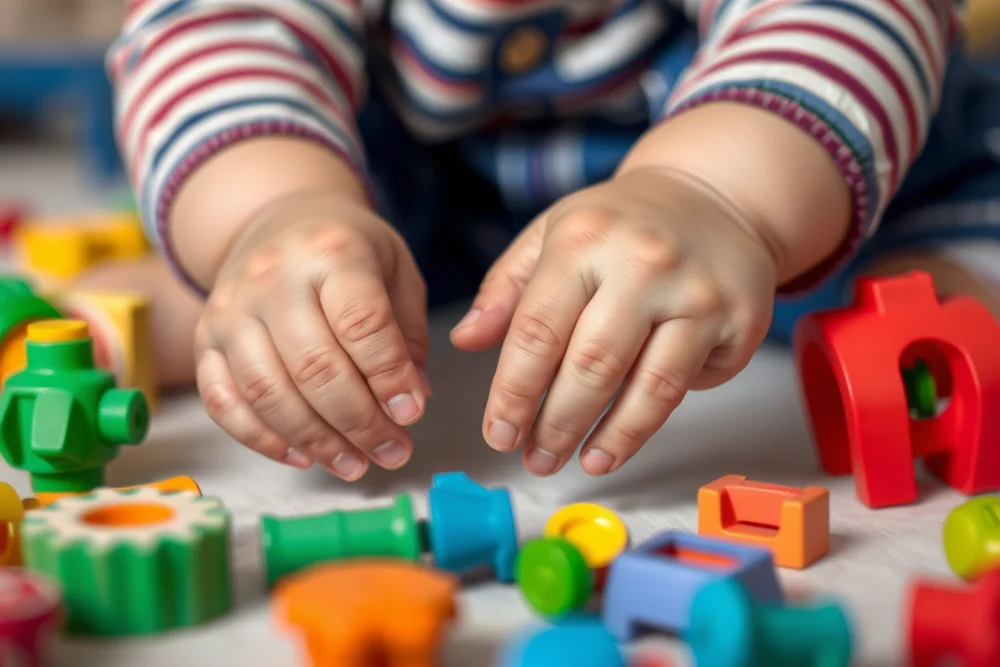
Fine motor development is a result of the brain forming connections between the motor cortex and the muscles in the hands and fingers. As children interact with their environment, they’re not just playing — they’re building neural pathways that will support their motor abilities for years to come. This is why hands-on, interactive activities are so important for building fine motor skills in young children.
I once watched my son try to stack blocks, and it was clear that he was working on both his balance and his fine motor skills. The act of picking up small blocks, aligning them, and stacking them required coordination and control — all of which are part of the fine motor development process. These activities not only strengthen the muscles in the hands but also improve the brain’s ability to plan and execute movements.
Research from the American Academy of Pediatrics shows that by age 3, children should be able to use a spoon, pick up small objects, and stack blocks. However, every child develops at their own pace, and it’s important to provide them with the right opportunities for practice. Whether it’s threading beads or using tongs to pick up food, these activities help build the neural connections needed for fine motor skills.[3]
Fine motor skills are the brain’s way of saying, 'I can do this!'
Related: Best fine motor skills
Related: Fine motor skill activities
Related: Develop fine motor skills
Related: Fine motor skills activities for kids
Related: Best Develop Fine Motor Skills
Related: Easy fine motor activity
Related: Top Crafts For Fine Motor Skills
Related: Budget Fine Motor Skills
Related: Diy Fine Motor Skills
Related: Cheap Fine Motor Skills
Related: Affordable Build Fine Motor Skills
Related: Gametime Playground Equipment
Creative Activities to Build Fine Motor Skills at Home
When I first started looking for ways to build fine motor skills at home, I was overwhelmed by the variety of activities available. But I quickly realized that the best ones were the ones that used everyday items and could be done during a busy day. For example, using playdough to make shapes helps strengthen hand muscles and improves coordination. It’s also a great sensory activity for young children.
One of my favorite activities for building fine motor skills in preschoolers was using a clothespin to pick up small objects. I filled a basket with buttons, beads, and small toys and let my son use the clothespin to pick them up and place them in a bowl. It was a simple activity, but it helped him practice grasping and pinching. After a few weeks, I noticed that he was able to hold a pencil more easily and write more clearly.
Other activities, like using tweezers to pick up small objects or using a hole punch to make holes in paper, also help build fine motor skills. These activities are not only fun but also help children develop the precision and control needed for tasks like writing and cutting. The key is to make these activities a regular part of your child’s routine.
Turn fine motor activities into games to keep your child engaged. For example, you can challenge your child to collect as many beads as possible in one minute.
“I remember the moment my toddler son, then 2 years old, tried to hold a pencil for the first time.”— TinyRomp editors
Related: Fine Motor Skills Examples
The Role of Fine Motor Skills in Writing and Handwriting
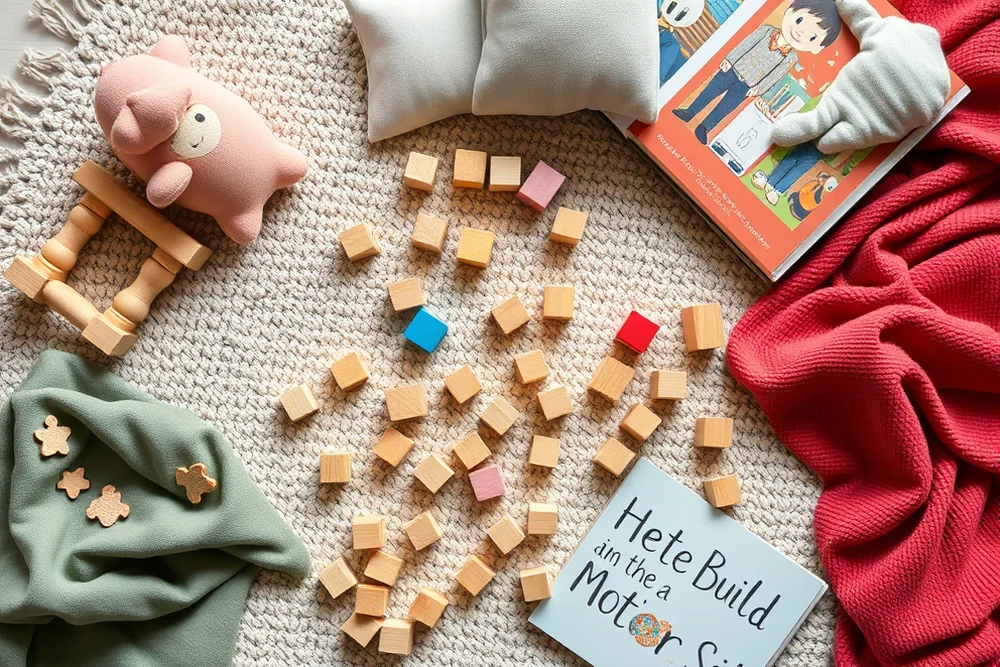
With building fine motor skills for writing, the connection between the hands and the brain is essential. Writing requires not only the strength of the fingers but also the coordination of the hand and wrist. This is why activities that involve gripping, pinching, and controlling small objects are so important for building fine motor skills for handwriting.
I’ve seen how much of a difference strengthening fine motor skills can make in a child’s handwriting. My son used to write with a shaky hand and messy letters. After a few weeks of working on activities that required fine motor control, like using tweezers and scissors, his handwriting improved dramatically. His letters were more consistent, and his grip on the pencil was stronger.
Research has shown that children who have strong fine motor skills are more likely to write legibly and efficiently. A study published in the Journal of Educational Psychology found that children with poor fine motor skills were more likely to struggle with writing tasks. This is because writing requires the coordination of multiple muscle groups and the brain’s ability to plan and execute movements.[4]
How to Build Fine Motor Skills for Kindergarten and Beyond
As children prepare for kindergarten, it’s important to ensure that they have strong fine motor skills. This includes the ability to hold a pencil, use scissors, and write legibly. These skills are not only important for academic success but also for confidence and independence.
One of the best ways to build fine motor skills for kindergarten is through activities that involve precision and control. For example, using scissors to cut paper, threading beads, and writing with a pencil are all excellent ways to develop these skills. I’ve found that practicing these activities regularly can lead to significant improvements in a child’s fine motor abilities.
It’s also important to provide children with a variety of materials and tools to help them develop their fine motor skills. This includes items like playdough, sensory bins, and fine motor kits. By giving children the opportunity to explore and practice these skills in a fun and engaging way, you’re setting them up for success in kindergarten and beyond.
⭐ Classic
A simple, no-frills playdough recipe with just flour, salt, and oil.
💰 Budget
A cost-effective version that uses readily available ingredients and no food coloring.
⚡ Extra-Fast
A quicker version that skips kneading and uses a food processor to mix the ingredients.
✨ Depth
A version that includes different colors and textures to enhance sensory development.
🥗 Light
A low-calorie, light version of playdough that uses alternative ingredients for a healthier option.
What You'll Need tap to check off
- 1 lb Flour
- ½ cup Salt
- Water to taste
- 2 tablespoons Vegetable oil
- 1 tablespoon Baking soda
- ½ cup Food coloring (optional)
Method tap a step when done
- In a large bowl, mix together flour, salt, baking soda, and vegetable oil until well combined.
- Gradually add water, one tablespoon at a time, until the mixture forms a soft dough that is not sticky.
- Knead the dough for about 5 minutes until it becomes smooth and elastic.
- If using food coloring, add a few drops and knead until the color is evenly distributed.
- Divide the dough into small portions and store them in airtight containers for later use.
- When ready to use, let the dough sit at room temperature for 10-15 minutes to soften.
Key Facts
Build Fine Motor Skills
Related: Develop fine motor skills
Common Questions
how to build fine motor skills at home?
how to build fine motor skills in preschoolers?
how to build fine motor skills in young children?
how to improve fine motor skills?
how to develop fine motor skills?
References
- Building Fine Muscle Skills in Young Children (aces.edu)
- Fine Motor : U.S. Bureau of Labor Statistics (bls.gov)
- Building fine motor skills and why it matters - MSU Extension (canr.msu.edu)
- Fine Motor Skills Worksheets - DID YOU KNOW! (dev-drupal.sustainablecampus.cornell.edu)
- Supporting Fine and Gross Motor Skills In and Out of the Classroom (extension.psu.edu)
Cite this guide
TinyRomp (2026). Build Fine Motor Skills. https://tinyromp.com/build-fine-motor-skills/
Feel free to cite or share this guide.